This is a continuation of Mosaic Mindset Meld blog post where I critically explored how I determined ways to adapt and improve in the early years during my now 50-year visitor experience career. I then became influenced by the experience economy philosophy being reflected successfully in interpretive facility planning and design, in the hospitality business, in tourism partnerships and in strategic rural development. This gave me a bigger picture of how important the future of the visitor experience was and how the interpretive profession had to expand not only its role but also grasp its potential within it. These next four epiphanies are what resulted.
Epiphany # 5 Interpretation needs to be involved during the complete visitor journey.
The visitor experience: talk & relate to your prospective visitor image courtesy Bill Reynolds
My time doing feasibility analysis, planning and design for heritage tourism facilities, provided a lengthy exposure to the workings of the tourism industry where businesses were focusing on the visitor experience concept. By taking a tourism experience mindset, one’s thought of the holistic visitor meant a further broadening and an acceptance of the concept of the visitor journey- consisting of pre, during and post visit components.
There are 7 distinct visitor stages:
· decision making & trip planning,
· travel to the site,
· arrival,
· on-site experiences,
· departure,
· travel back home and
· recollection.
There is a strategic role for interpretation in all of these pre, during and post trip stages. Interpreters need to justify their input and insert their knowledge of interpretive planning and mission reinforcing components into all of these processes. The visitor and the site benefit.
Stage 1 Decision making and trip planning involves being influenced by upfront site marketing. This deals with the classic AIDA marketing formula.
A= Awareness I=Interest D= Desire A=Action
Prospective visitors need to be made Aware of your site (and interpretive experiences) then an Interest level needs to be cultivated followed by generating a feeling of Desire to travel to your site. This marketing team/individual responsible needs to be familiar with the site interpretive outcomes so they are being reflected to the prospective visitor. Action is the decision stage to travel to the site and this is where interpretation professionals continue to provide help. They ensure the visitors’ planning phase reflects mission-driven interpretive outcomes.
Stage 2 Similarly with the visitors’ travel to the site aspect of the visitor journey, there are in- care tactics and roadway infrastructure considerations that can allow for a smooth, stress free, anticipatory building, mood creating atmosphere during pre-arrival. Help out interpreters!
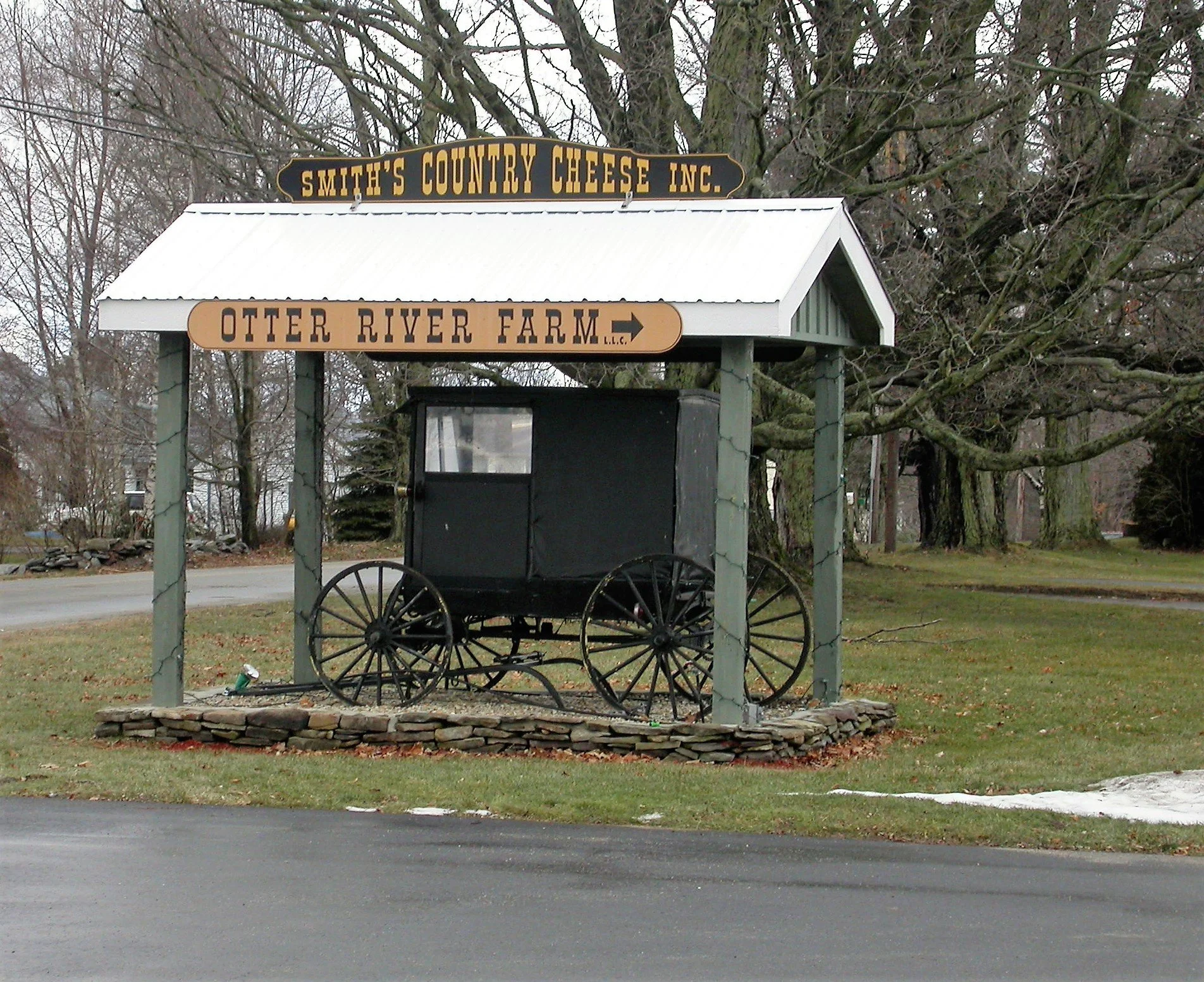
Add flair to directional signage image courtesy Bill Reynolds
Stage 3 Site arrival accomplishes a greeting function. There are welcoming, orientation and invitational components. They all aim to express a sense of inclusiveness and gladness that “you are here” to experience what makes the site experience special. There is a great opportunity to set the stage and create expectations for our guests. Wanted: Interpretive Input ! you may want to take a glimpse at our blogpost Sharing Great Ways to Greet the “Guests” Aug 19, 2022.
Stage 4 On-site experiences, as a prime component of the site engagement function, is the normal purview of interpretation. We need to branch out. There is also a services and comfort function on-site where our visitor spends a lot of time. This involves infrastructure like pathways, parking, washrooms, benches, food and beverage areas, as well as retail opportunities. My stint involved in facility planning and design showed me that these are all vastly underutilized customer contact points where interpretive outcomes could have an influence. More on this in Epiphany 6.
Stage 5 Next the visitor will be departing and if designed well they should experience a site function expressing farewell with a “glad you came,” and “hope you return” approach. A mailing list gathering “let’s keep in touch” strategy can be beneficial here. Site evaluation needs to be considered at this point and during the last recollection stage. Planting the seeds for future involvement and an ongoing relationship is critical and works hand in hand with stage 7.

Get creative with departure signage -write personal heritage site observational notes summarizing visitors’ day experiences like this food retailer did and post them as visitors are in the leaving stage of their journey.
Stage 6 During the drive home there is an opportunity for roadway infrastructure and in-car activities to help with positive memory reinforcement. Adding an interpretive flavour can provide a solid trip enhancement.
Stage 7 There is an opportunity here for an at home recollection stage when visitors could be encouraged by the marketing team/individual, along with interpretive assistance, to consider not only follow through activities, but also return visitation strategies, sharing word-of mouth promotion among friends, future volunteer involvement, and/or financial support. In my experience, zoos do this better than most.
Interpreters will be seen as invaluable at all visitor journey stages if they accept and embrace their potential impactful on the front end and back end marketing assistance role for site-visitor communication, especially website and print strategies. Where we need to spread interpretive influence way more, is integrating interpretation into the arrival stage 3 and into the services site function of stage 4. Grasping this upfront design importance led to epiphany 6.
Epiphany #6 Interpretation is experiential design work, so interpretation needs an influencing seat at the design table.
Site infrastructure should aid in revealing interpretive mission and messages. Adding a design mindset to our toolbox means interpretive input could get integrated into site design, at the beginning, ensuring buildings and landscaping, pathways and parking help set the stage for curiosity and learning. Trying to do this after building and landscape architects have completed their designs has been the norm and has had some degree of success but way below potential awesomeness. You might want to check our blogpost What We Want Is A Seat At The Table Jan 16, 2025, where we developed this concept.
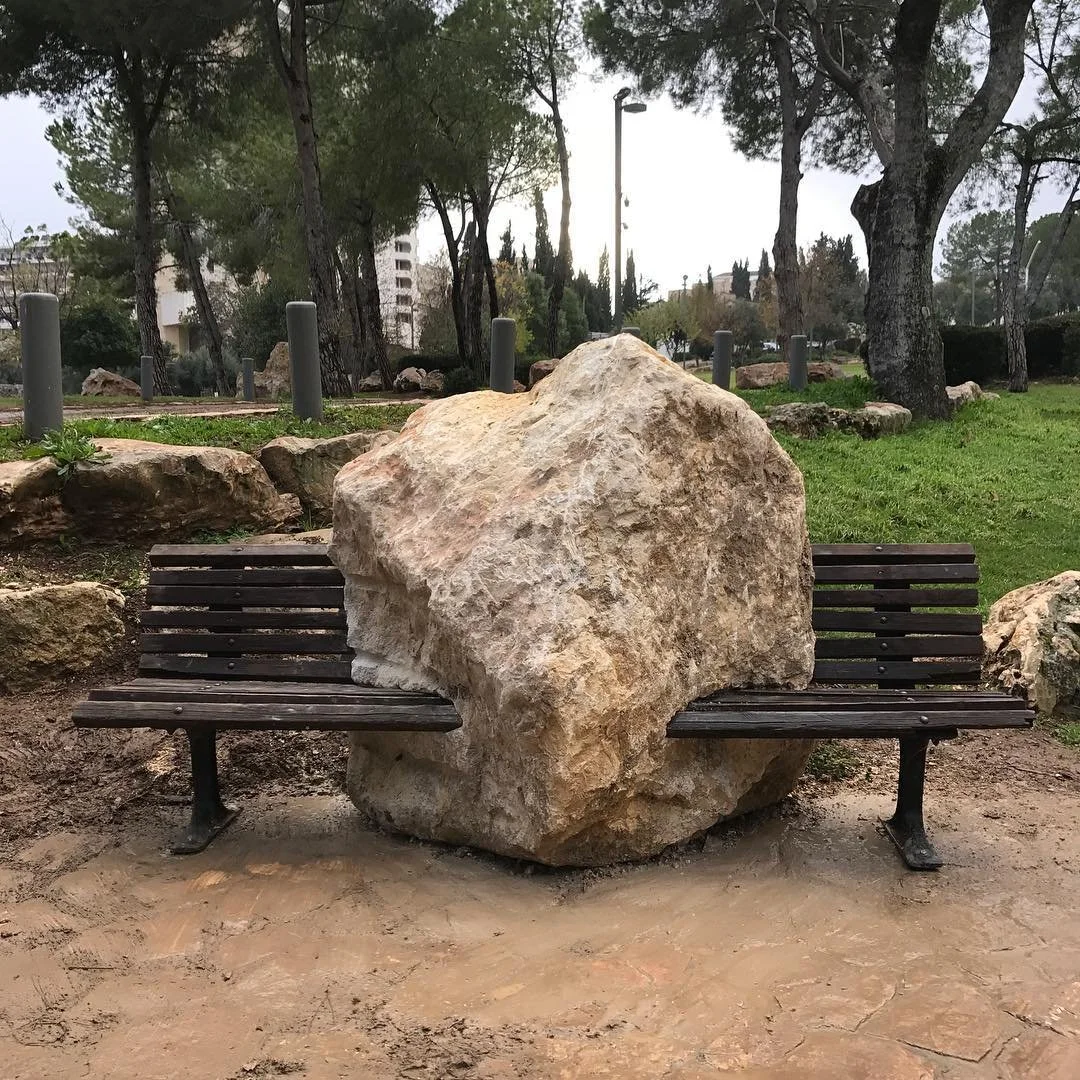
Amenity integration with site interaction
You may need help convincing your site team to view the importance of integrated visitor journey planning, so bringing other visitor experience players on board could be beneficial. Your site is a tourism industry asset. You, as an individual, are a tourism industry asset. Heritage sites are desired experiences in the tourism mix – often they just need a helping hand with enhancing their visitor-orientation. Tourism planners and successful tourism businesses know there are multiple influencing factors at all points of the journey. They could supply you with invaluable design advice and confirmation.
Tourism is based on creating diverse and enjoyable experiences for targeted individuals. In addition to upfront design what is at the forefront of enabling that enjoyable experience? Hospitality training ! This became another tool for my toolbox. I found it very helpful when trying to appreciate the diversity of my various site visitors and the empathy I gained from embracing the philosophy of “stepping into my customers’ shoes.“ Talking with front line personnel like service staff, tour guides and visitor information centre counsellors provided me with great input. This perspective can aid immensely in experiential site design work. As Tilden said -you must relate to the visitor. We explored this concept more in blogpost Relating to Visitors Dec 13, 2023. You must cultivate a seedbed ready to accept any seeds containing site messaging.
Epiphany #7 The power and passion of people in partnership
When I worked in tourism destination planning involving a process called cluster development, it was necessary to pull various stakeholders together and break a few silos. When we created a vision together and we all saw we wanted similar end outcomes it was easier to rally the troops. Where there were individuals desiring a change working on their own, progress was moving at glacier speed. Then we brought people together!
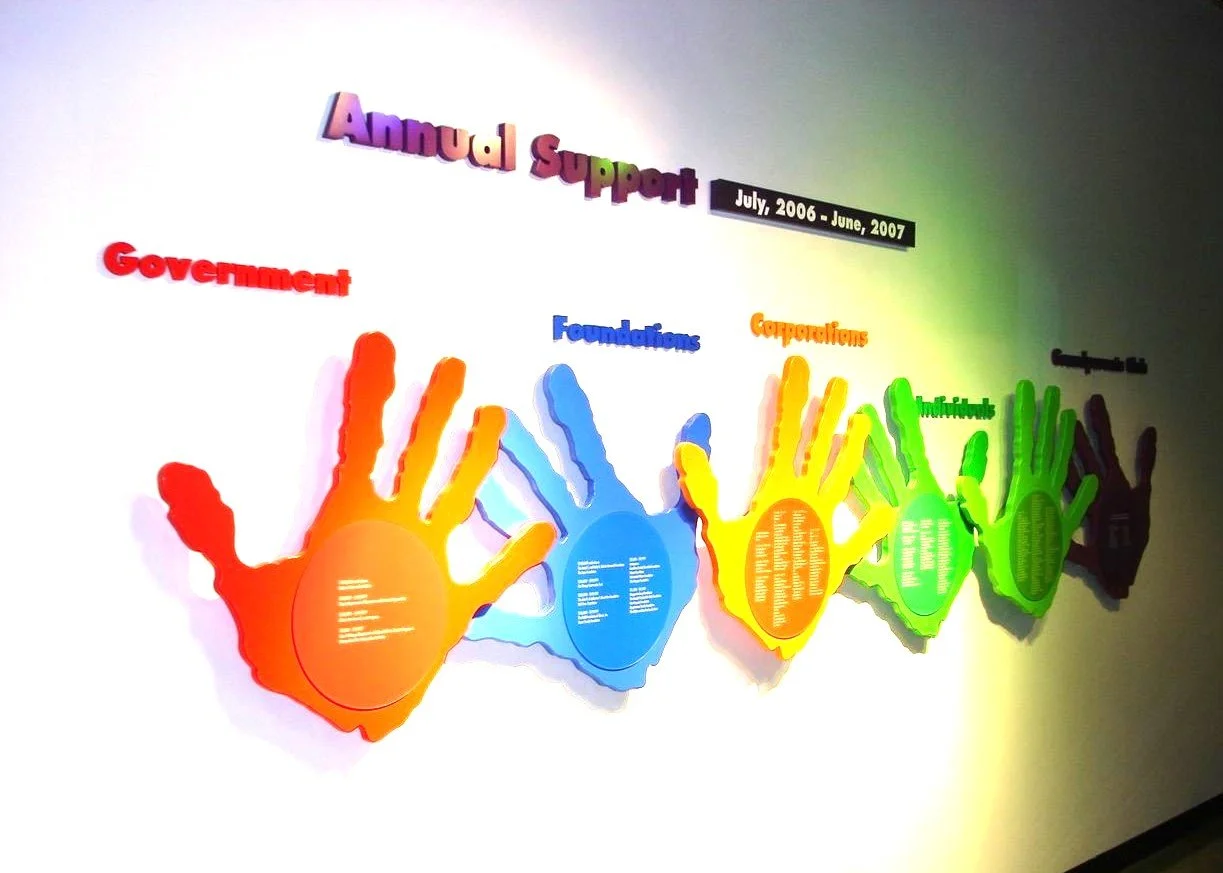
Stakeholders come in many shapes and colours Image courtesy Bill Reynolds
Bringing the needed people to the table, both from the public and private sector, was paramount. Having a catalyst that could facilitate this was key. That was our role and we became good at it. Building trust among the players was important and breaking bread together -sharing a meal- cannot be underestimated. Projects were initiated and moved forward when you had a mix of people energy and skills with leadership and support. This led to Epiphany 8.
Epiphany # 8 Do more with more
At various stages during belt tightening budget cuts (maybe still), everybody was singing the same demoralizing tune that we had to do more with less. The immediate revolt stance was to do less with less. I decided to turn it on its head. It was time to broaden horizons by taking what is called an abundance mentality. We could do more with more – we just had to hustle and find partners. Moral: Be cautious of your work silo.
I had realized the success we were having “in the field” by creating partnerships due to a collaboration mindset. This was not the time to scrape by and moan a diminished budget and reduced staff. It was time to search out who else had the resources or peoplepower that we needed to accomplish what we wanted to do. Moral: Always move forward with a triple win viewpoint. However, never lose sight of the end outcome, even with some compromises. By searching out others that had a positive outlook we were able to achieve many projects.
There is a parallel here with the mindset of shared ownership in the museum field that was becoming an antidote to the visitor look and leave issue. Interpretation was being viewed as co-creation and the visitor was a key member along with the greater community.
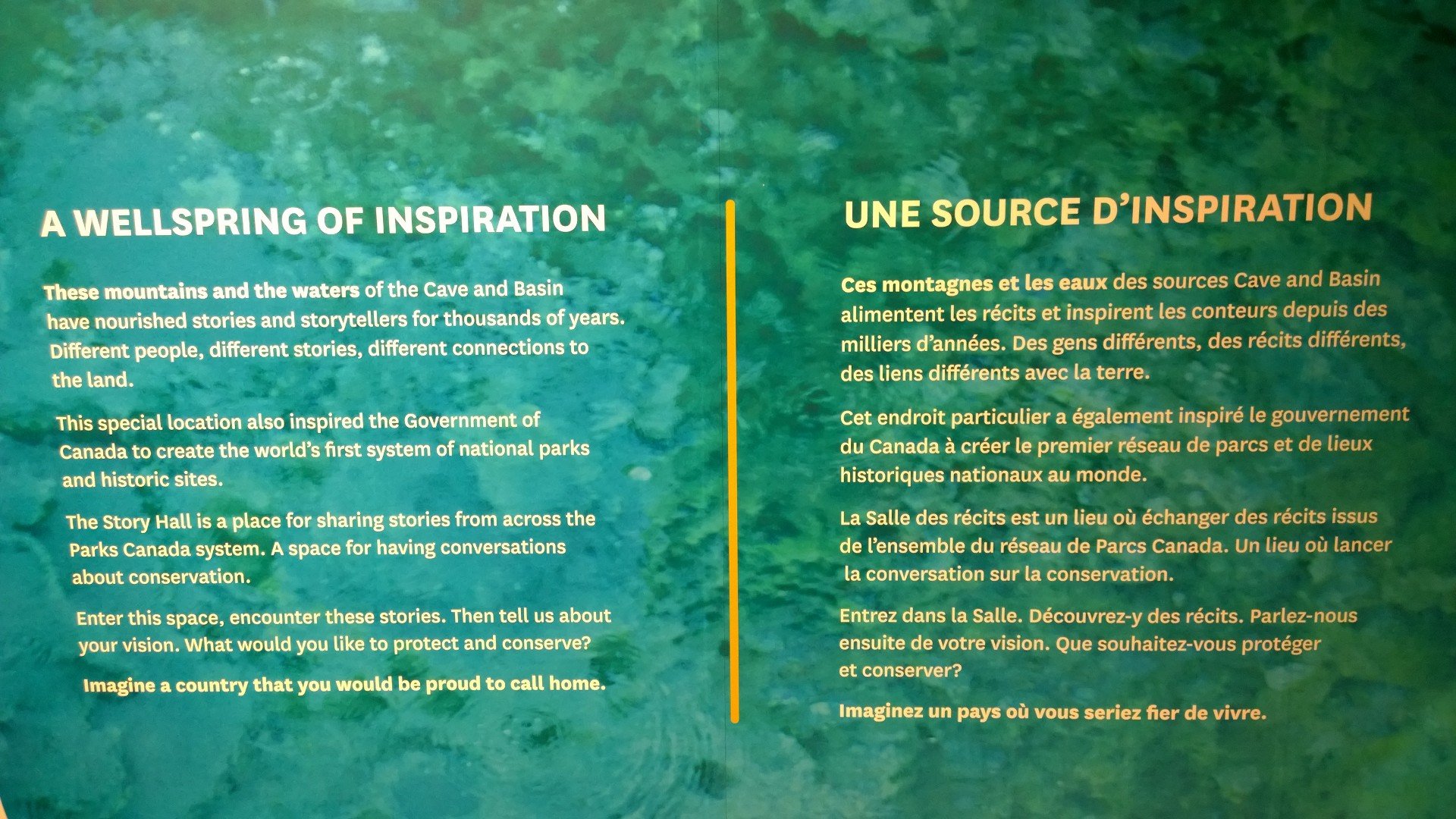
A. Co-creation exhibit introduction (all three images A,B,C are connected) image courtesy Bill Reynolds
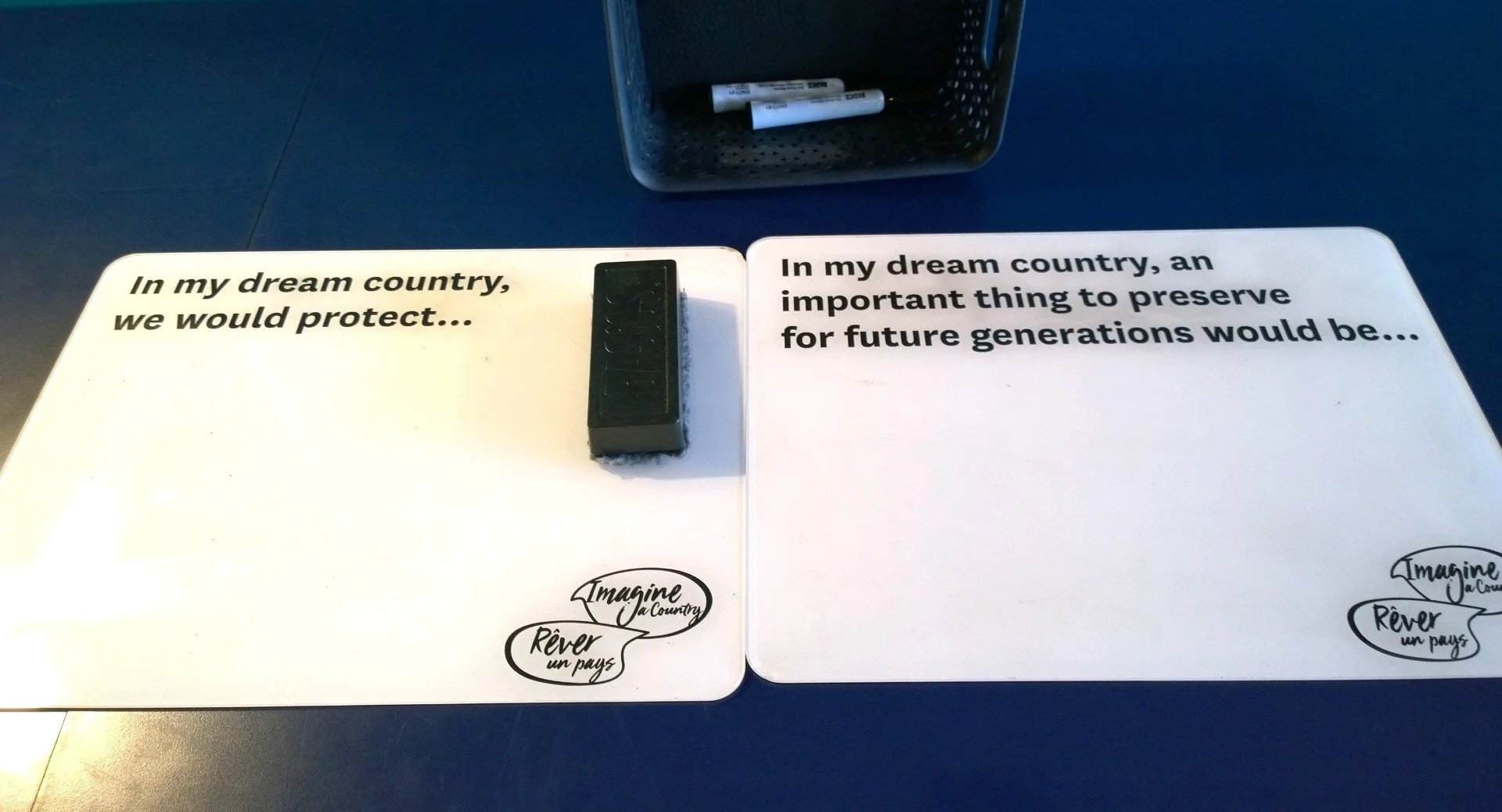
B. Visitor involvement & contribution (tables and stools provided -see next picture) Image courtesy Bill Reynolds
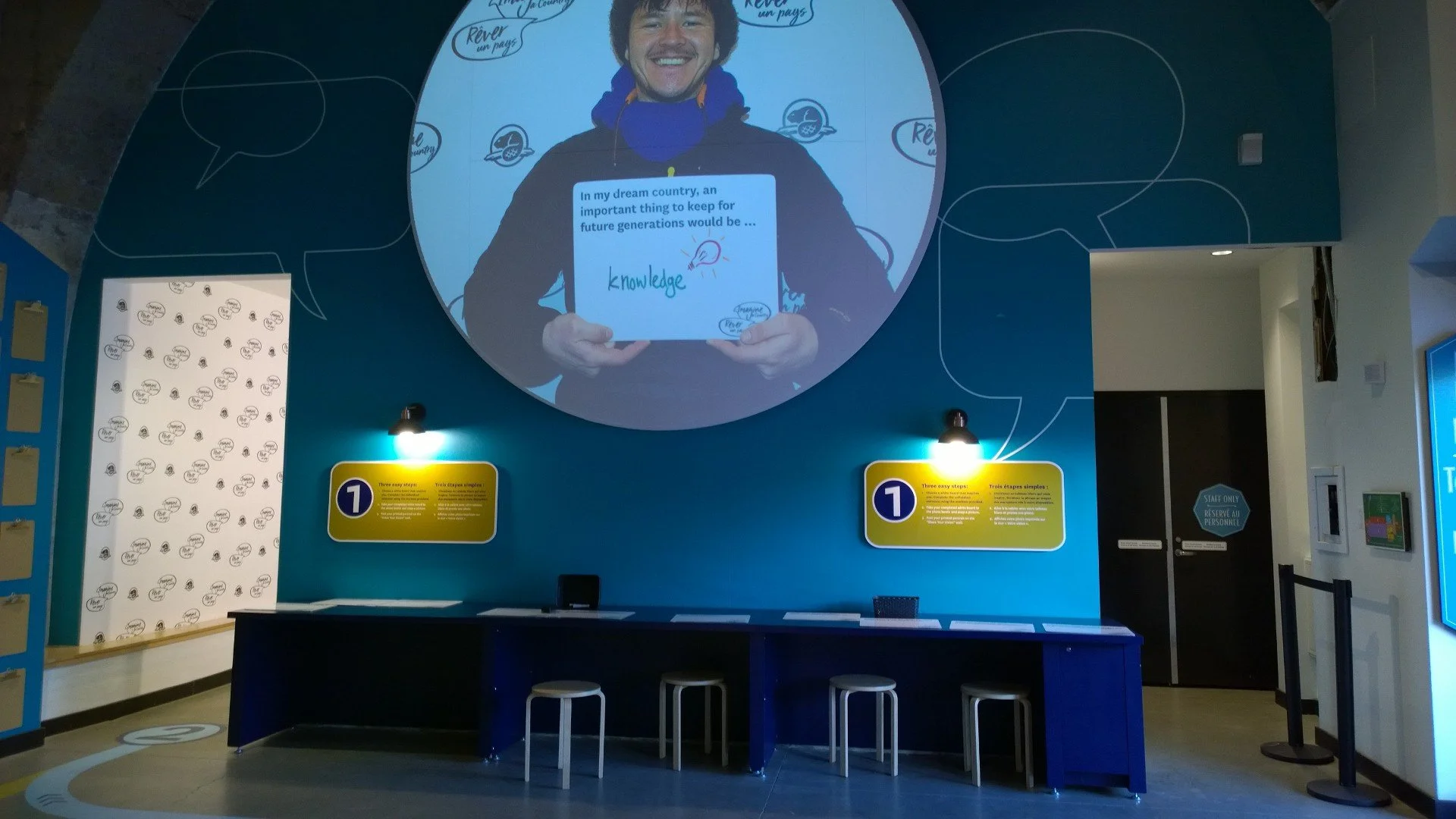
C. Visitor sharing (involves a camera booth) in co-creation national historic site exhibit image courtesy Bill Reynolds
The term was labelled civic engagement that would allow the community of visitors to celebrate personal stories in a meaningful space. Feeling connected to what had been perceived as institutional was a major hurdle to be overcome. The historical heritage side has been where I have mostly encountered this barrier jumping. I think this has potential for our natural heritage sites that could open up a similar exhibit contribution and engagement from nature buffs as well as those doing citizen science knowledge production and conservation work. We would love to hear stories where this has been achieved. Send us a note.
To set out to accomplish #5 and #6 interpretive planning and design integration you will need to implement the philosophy from #7 & #8. Then I believe we can move forward, giving the interpretation profession the power and influence it deserves.