
Yes, it’s true. There may be some innovative and interesting interpretive features lurking very nearby in places you have not considered visiting. That was certainly the case for me. I was delighted to find several innovative interpretive features installed at the Southern Arizona Heritage & Visitor Center (SAHVC) in Tucson, Arizona where I live, and in the Lexington, Kentucky Visitors Center -- the town where I grew up. This post will focus on the Tucson discoveries, and a later post will focus on the ones in Lexington.
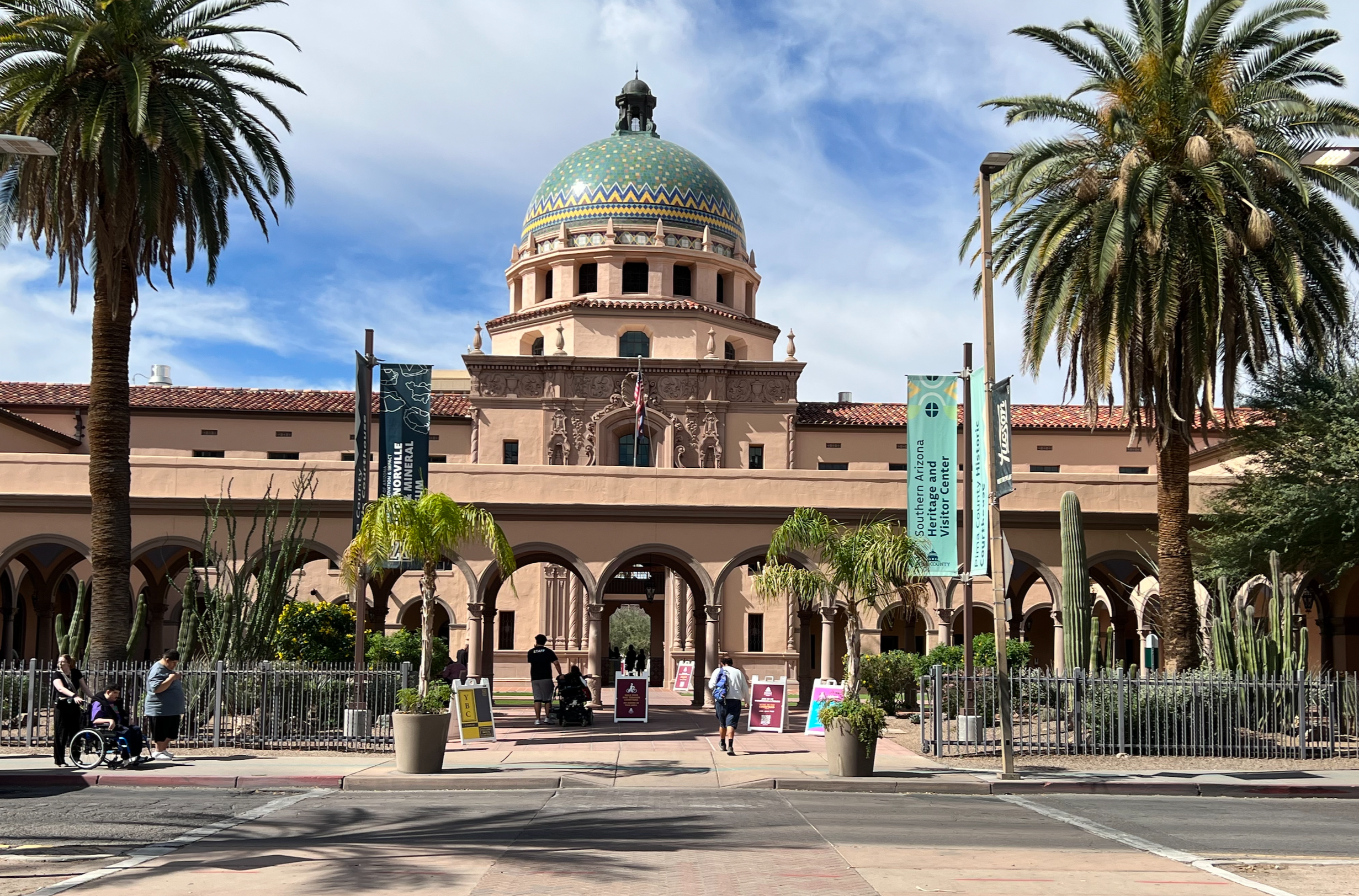
Photo by Mike Mayer
Southern Arizona Heritage and Visitor Center
Located in the historic Pima County Courthouse building in downtown Tucson, this 6200+ sq. ft. (576 sq. m) site offers a wide array of information on Southern Arizona. Four interpretive experiences grabbed by attention: A Welcoming and Attractive Courtyard, an Interactive Relief Map of Southern Arizona, Plants and Animals of Southern Arizona, and a multi-faceted Video Introduction to Southern Arizona.
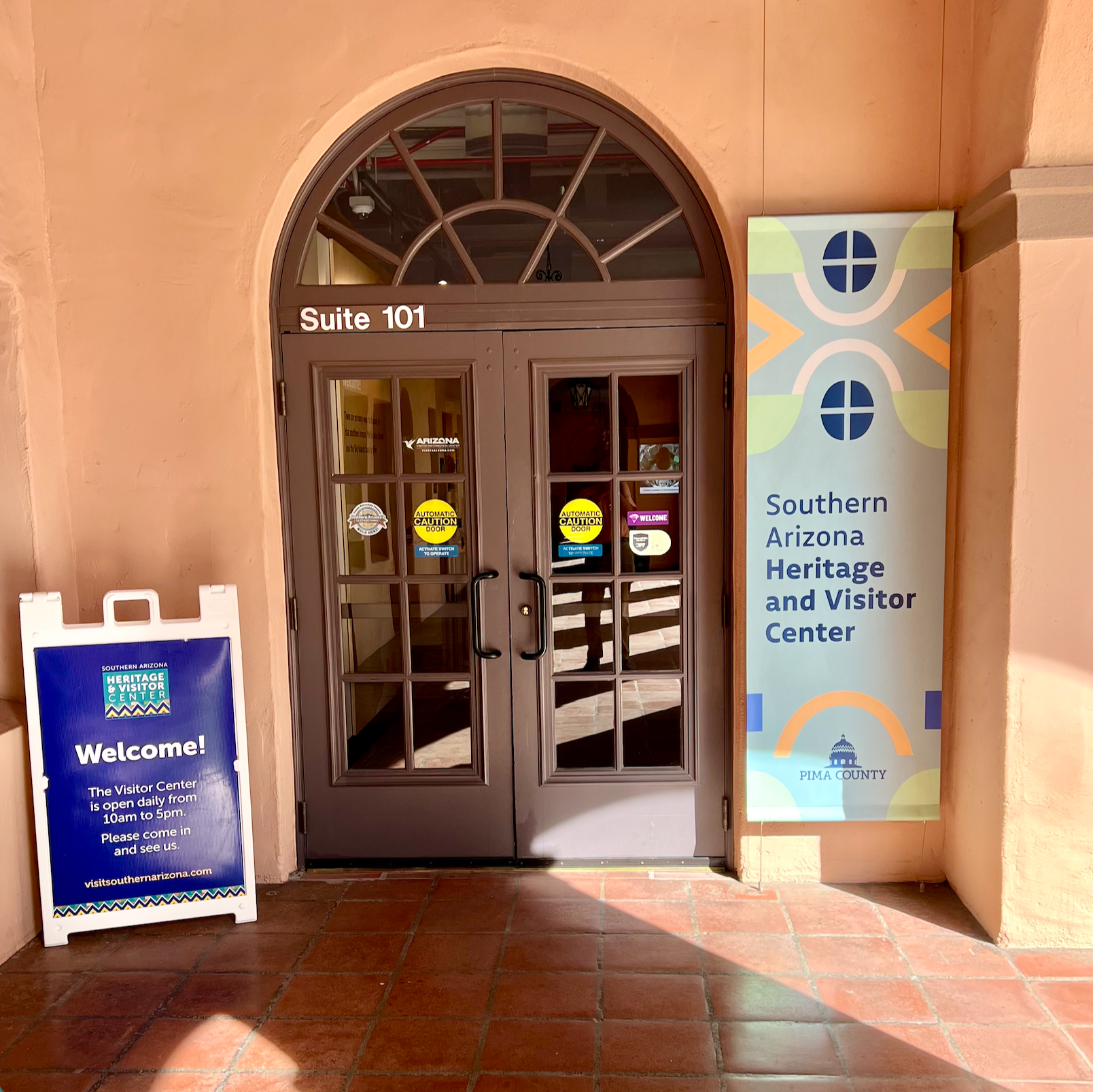
Photo by Mike Mayer
Welcoming and Attractive Courtyard Experiences
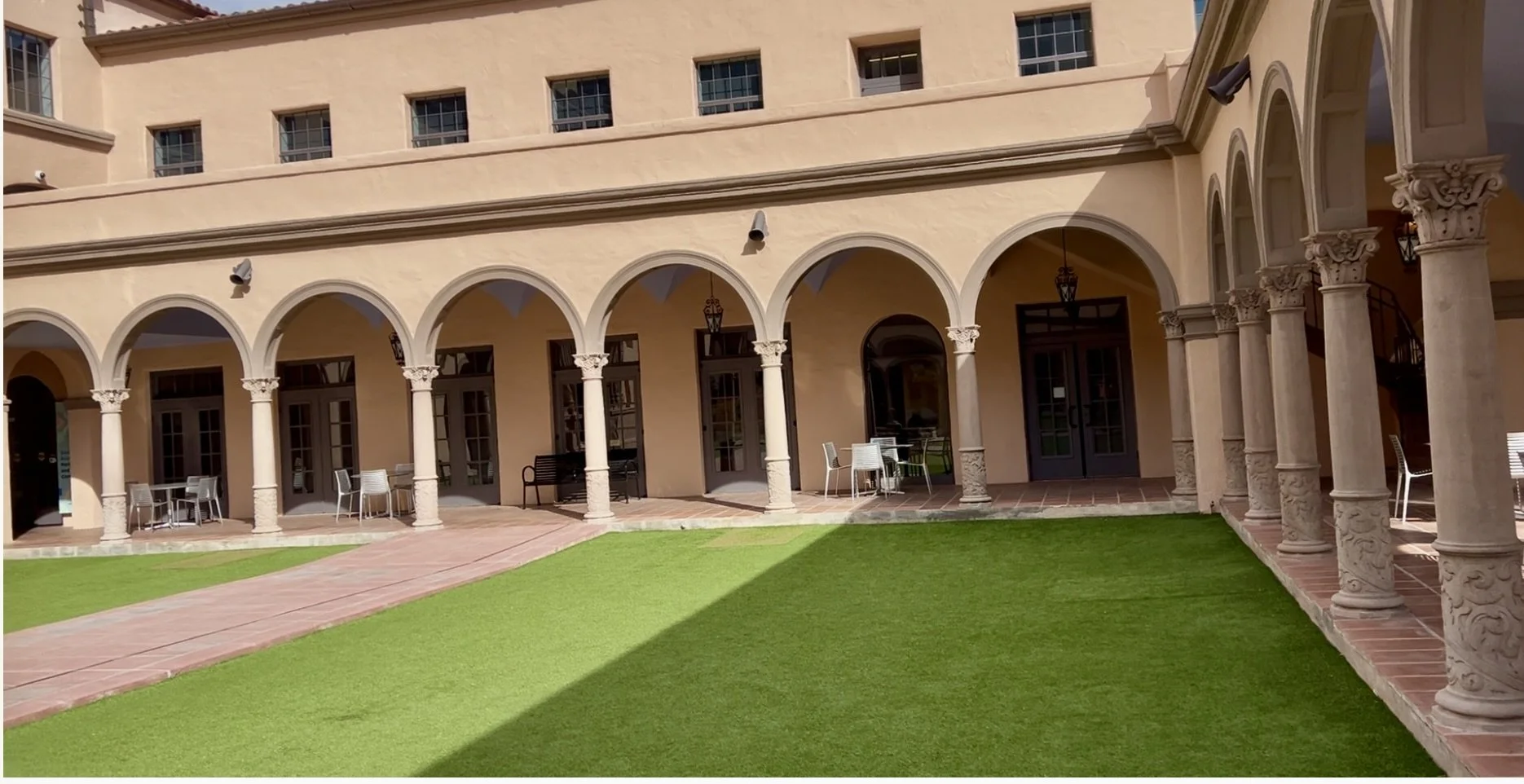
Photo by Mike Mayer
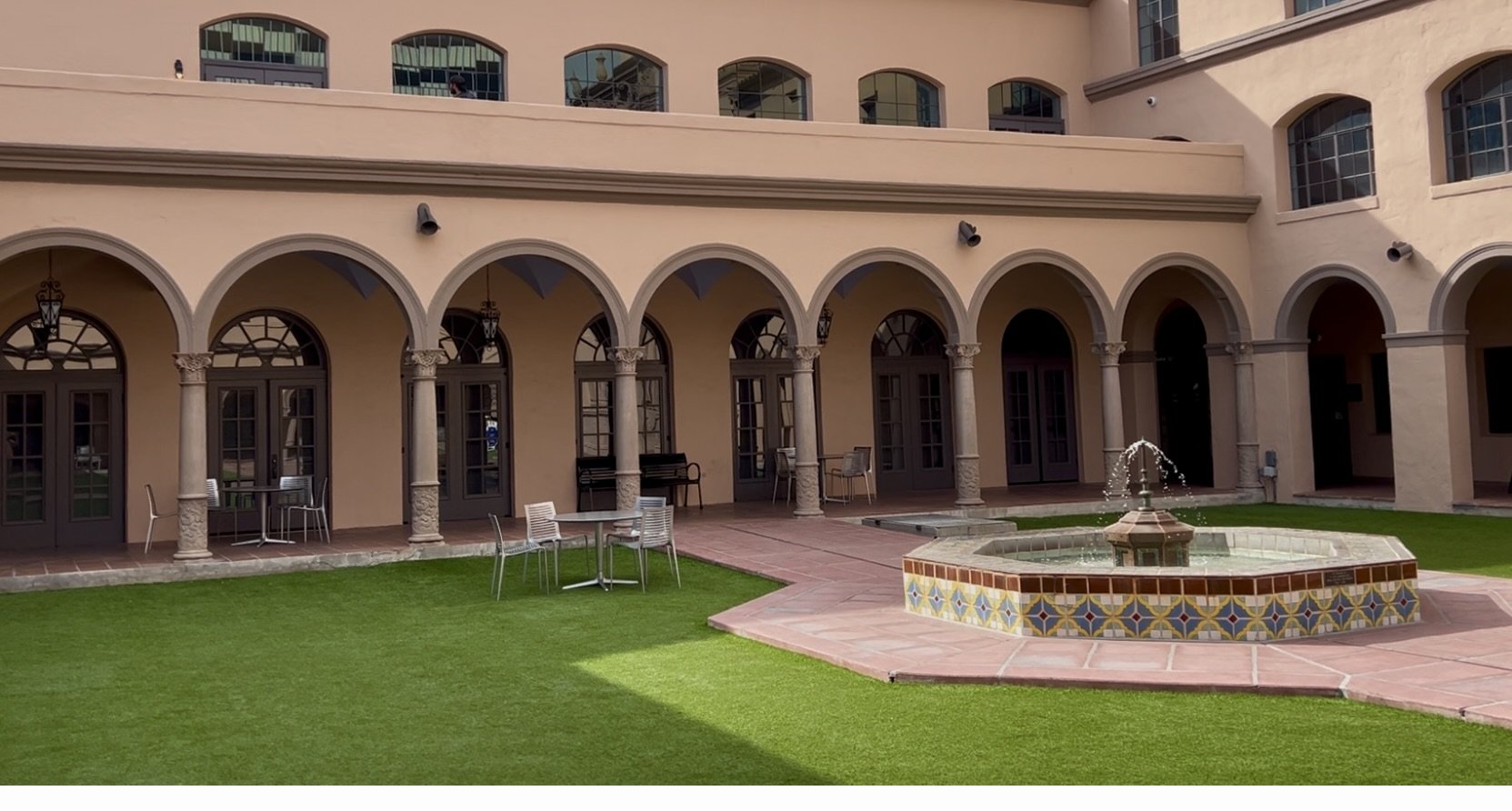
Photo by Mike Mayer
I am all about an attractive and welcoming approach to a site. When approaching the SAHVC from the street there are A-Frame signs announcing what is happening that day along with an attractive U-shaped courtyard with walkways down the middle and along the northern and southern edges. Filling in the space between the walkways is a grassy area where the fun is happening. There’s a video link at the end of the post highlighting some of the fun.
First, the architecture is pleasing and the courtyard is clean. There are portable A-frame signs to help direct the visitor to either the SAHVC, the University of Arizona’s Alfie Norville Gem and Mineral Museum or to announce the day’s event. Wednesdays and Friday’s music fills the courtyard, Tuesdays there are lawn games to play, and on Thursdays children’s activities are led by the Tucson Children’s Museum staff. The entire area is alive with the sounds of people enjoying themselves. Plus, it is energizing to hear and see the activity when you enter and leave.
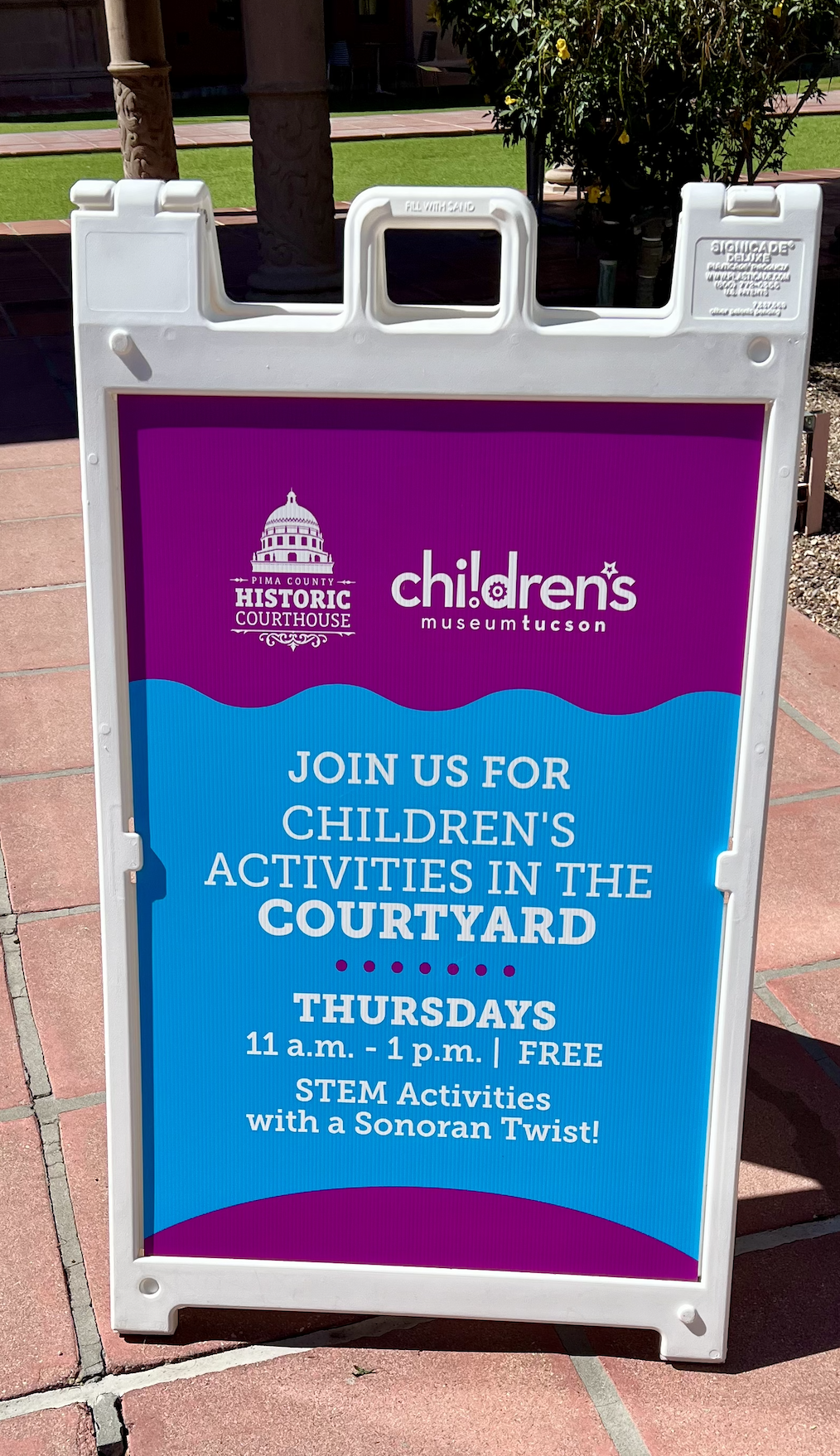
Photo by Mike Mayer
I am especially reminded of the large and very quiet courtyard leading to the visitors’ center at Grand Tetons National Park in Wyoming. There were plenty of visitors going to the front door, but it all seemed rather dead and dull. Putting a bit of life into an entrance and exit gets visitors ready for a positive experience and helps them leave with tangible memories…IMO
Interactive Relief Map of Southern Arizona
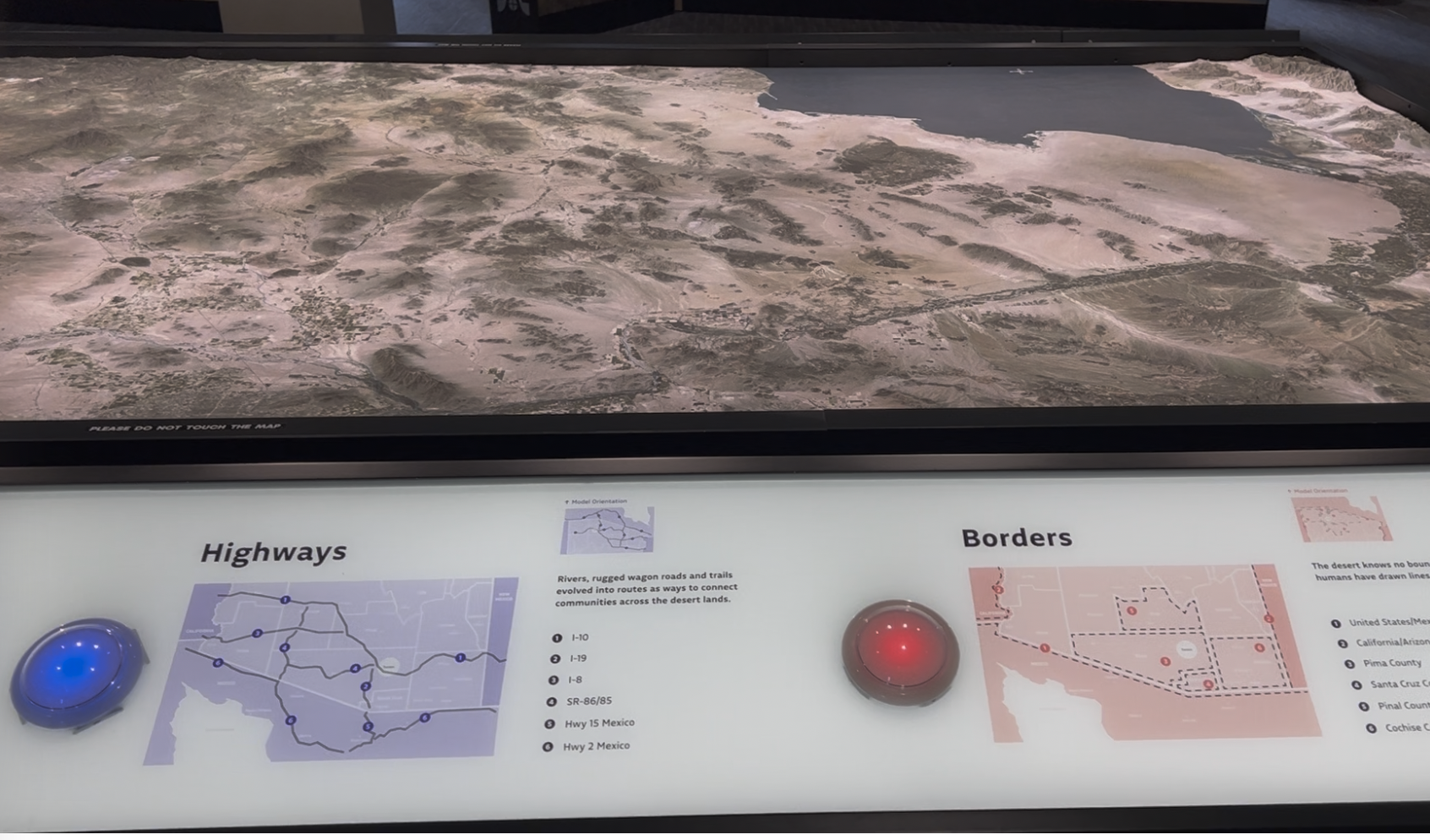
Photo by Mike Mayer
What a wonderful surprise to find this relief map. Of course, it is hard to miss since it is near the entrance and measures 12 ft. x 6 ft. (3.6 m x 2 m) and about 3 feet (one meter) high. It covers an area from the Sea of Cortez in northern Mexico to California on the west, to New Mexico on the east, south into northern Sonora, Mexico, and just north of the Pima County line. It was all I could do to resist touching the map. Luckily, that impulse was considered in the design, because along the long edge on both sides of the map are a series of buttons you could push to light up special regional features. (Another link at the end shows me having some fun). Highlighted on the map are rivers, cities, Native American lands, mountain peaks, major roads, boundary lines and more. LED lights with different colors help differentiate the various topics.
The first time I interacted with the map I was on my own. As a local, the map tickled my curiosity to see what would be included or left out. As an interpretive planner I wanted to observe visitor interactions as well. On a second visit a docent was available to talk about the region. She engaged those standing around the map by asking individuals to push a specific topic button. This gave visitors a clear visual perspective on the topic as the docent provided a brief explanation.
At the four corners of this map are electronic screens that can help you plan your “adventures” in Southern Arizona while looking at the map. What a great idea!
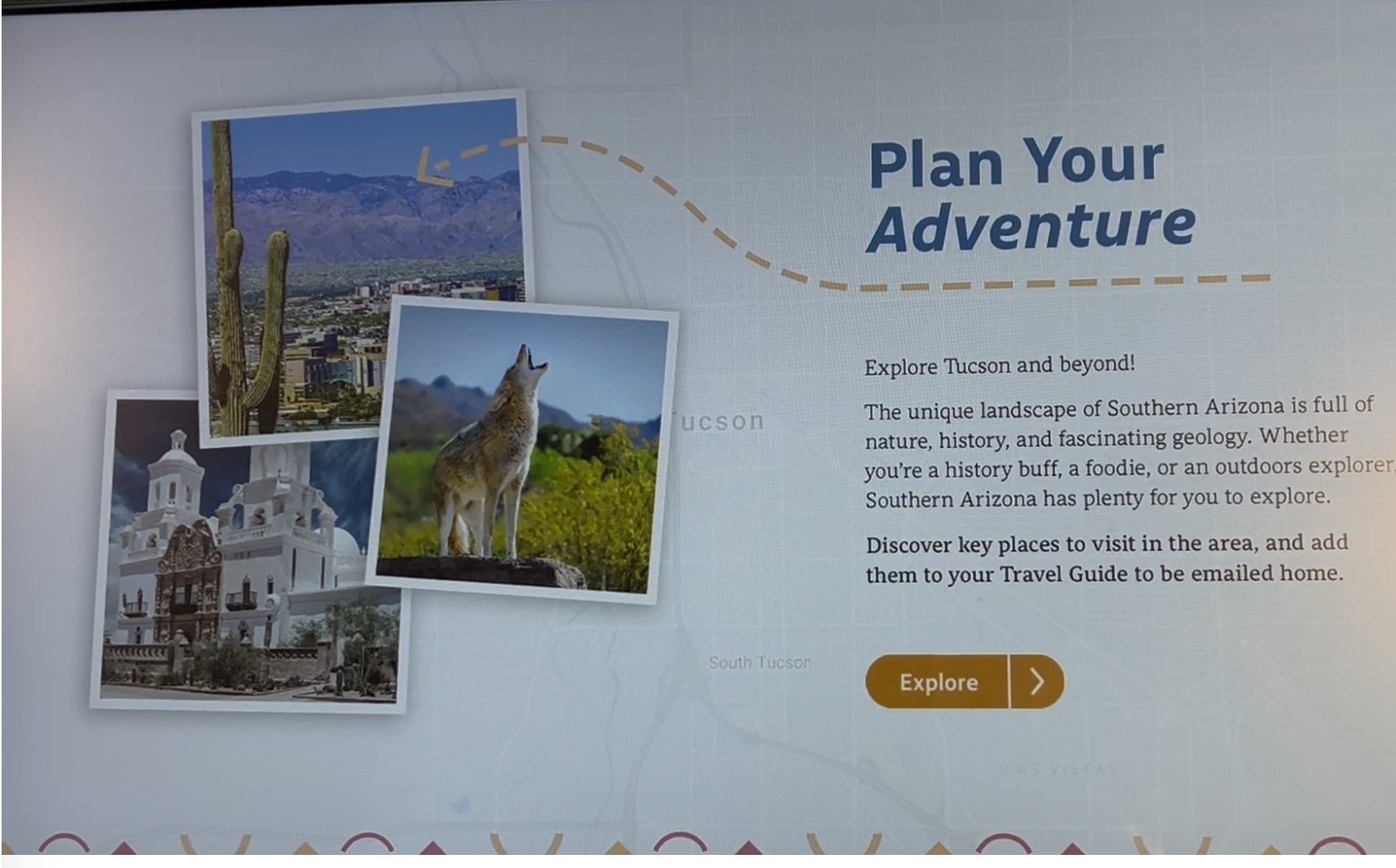
Photo by Mike Mayer
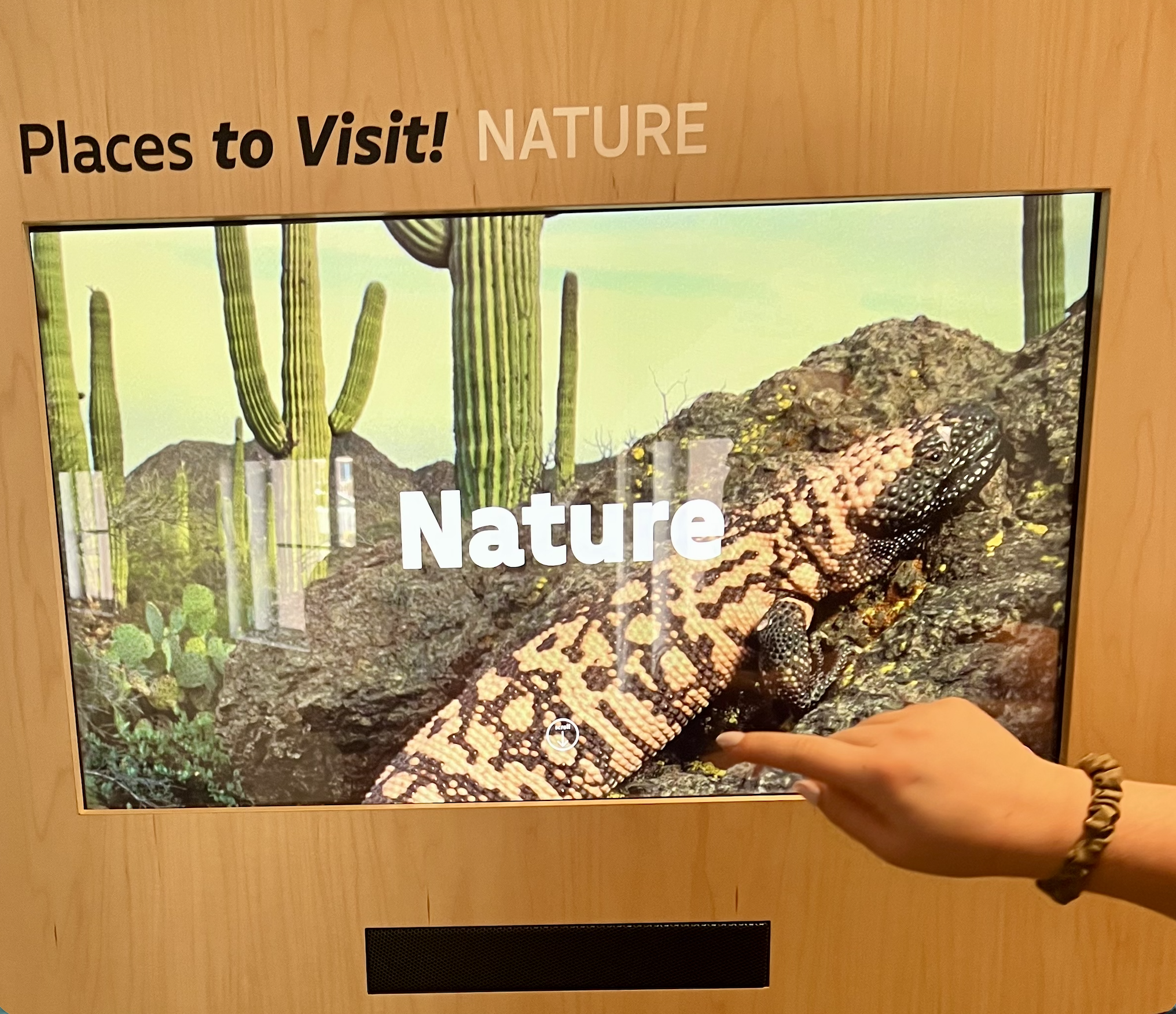
Photo by Mike Mayer
How many relief maps have you stumbled upon at national, regional and state parks that are simply static visualizations of the surrounding area? By adding a bit of light, color and interaction to the map it came alive even for a local resident like me.
A Few Observations…
· Would braille next to the topic buttons be useful for the visually impaired?
· The addition of auditory sounds for the different topics on the map would add another dimension for all visitors.
Plants and Animals in Southern Arizona
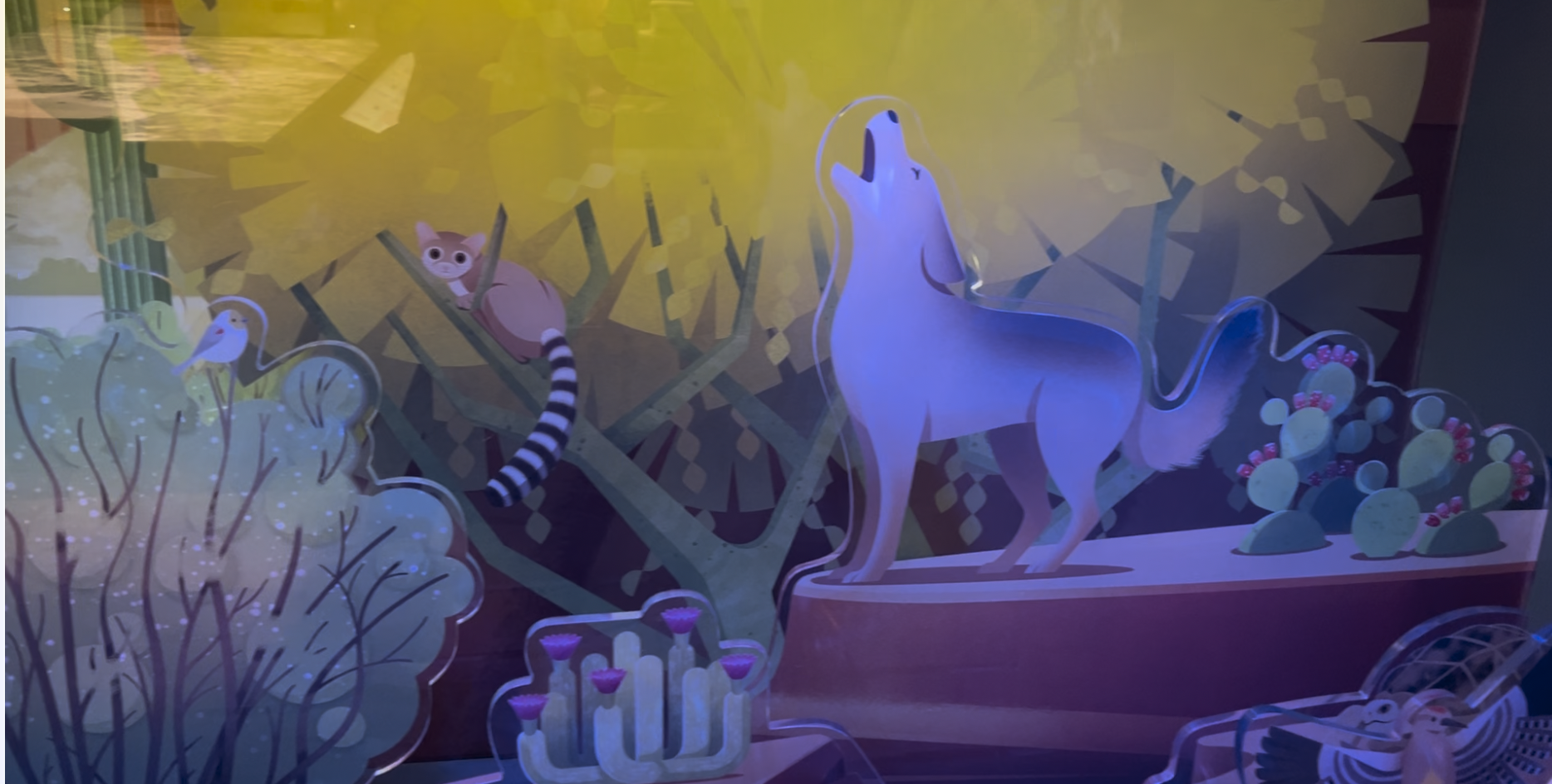
Photo by Mike Mayer
While this 16 foot (5 m) long display did not contain every single plant and animal species in the Sonoran Desert, it did provide 29 of the most iconic plants and animals that you might encounter – or at least be curious about like a saguaro, rattlesnake, pack rat, ocotillo, roadrunner, spadefoot toad, coyote, etc.. (See link to a video of this exhibit at the end of the post)
Good planning provided several strong interpretive messages in this display.
1. The muted lighting is a nice contrast to the bright lights that are highlighting the nearby Interactive Relief Map. It is also a reminder that in the desert the cooler nights are when a lot of activity takes place.
2. Sound is built into this display. There is a looped recording that provides the sounds of coyotes, cicadas, rattlesnakes, toads and even the sound of a summer monsoon storm.
3. Touch is not a problem. While I am not a big fan of plastic, the images painted on the individual plastic displays make it safe for anyone to reach out and touch the plant or animal. Most of the plants and animals are within easy reach of younger folks and adults may need to bend down a bit.
4. By not labeling each of the individual displays the attention and curiosity of the visitor can focus on the plant or animal, not on a label. There is a key at either end of the display with a small picture of each plant and animal with its common name for those who need to know.
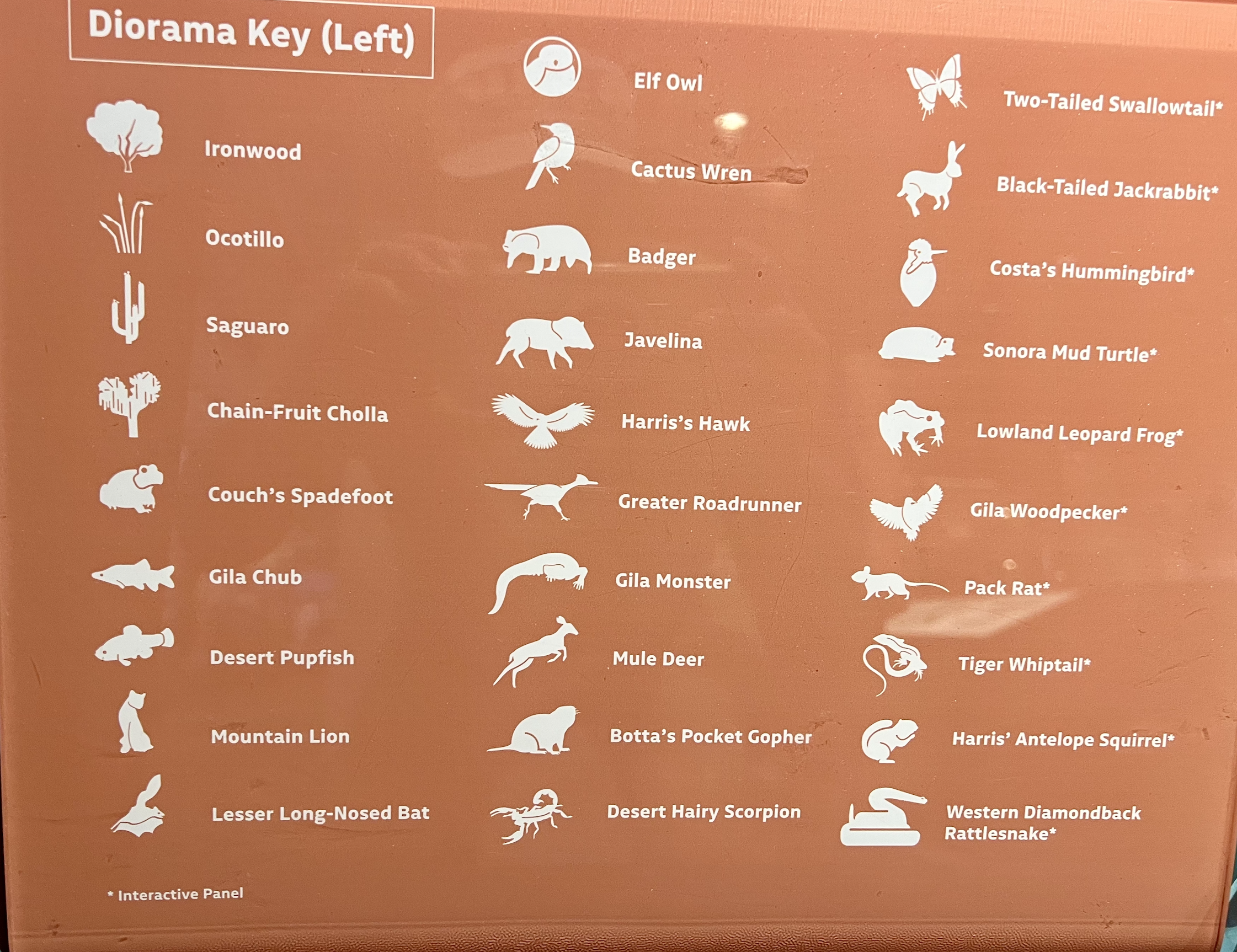
Photo by Mike Mayer
5. Animals that make their homes underground are depicted beneath the “surface” and the aquatic species are depicted in “water.”
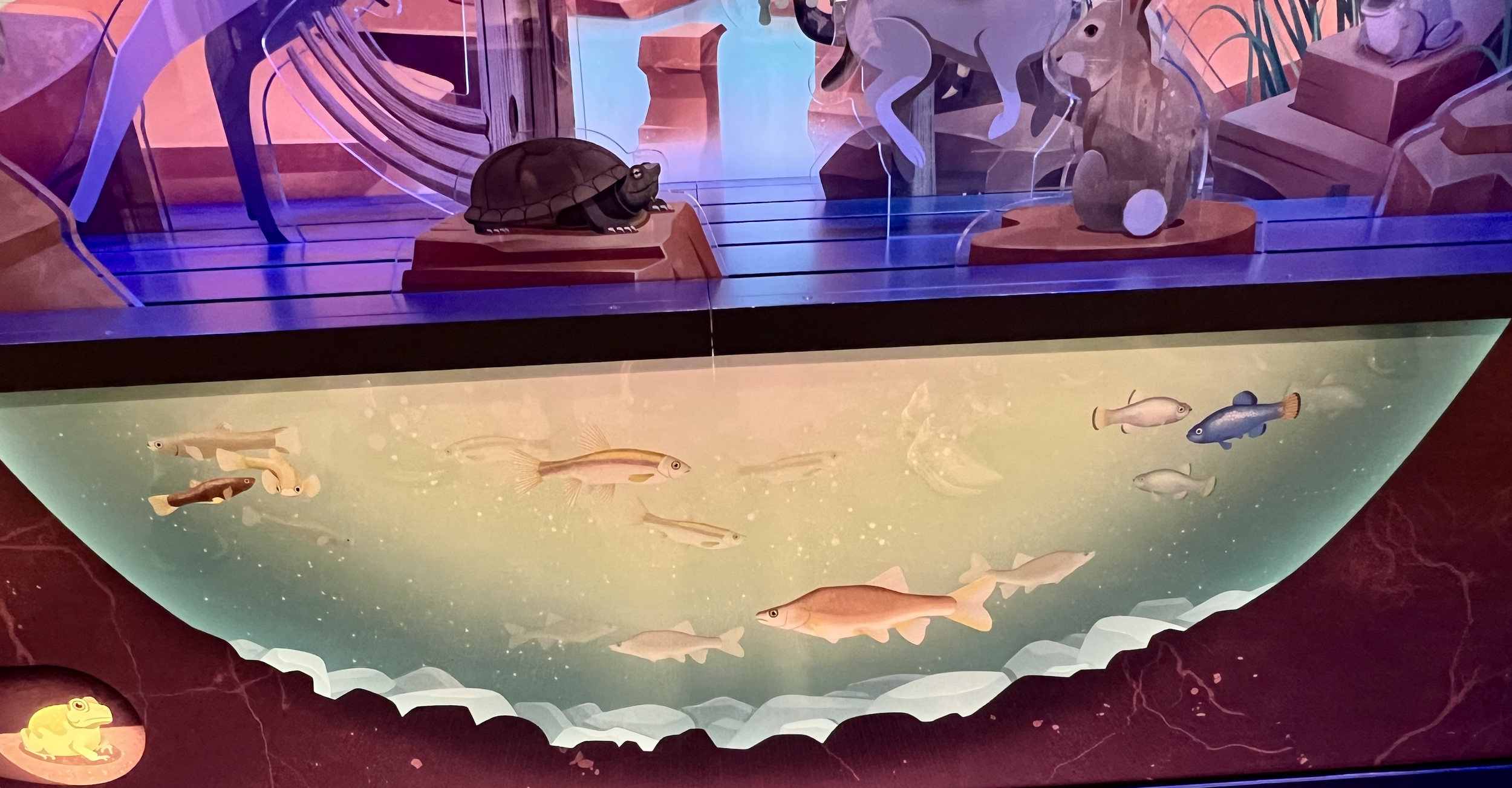
Photo by Mike Mayer
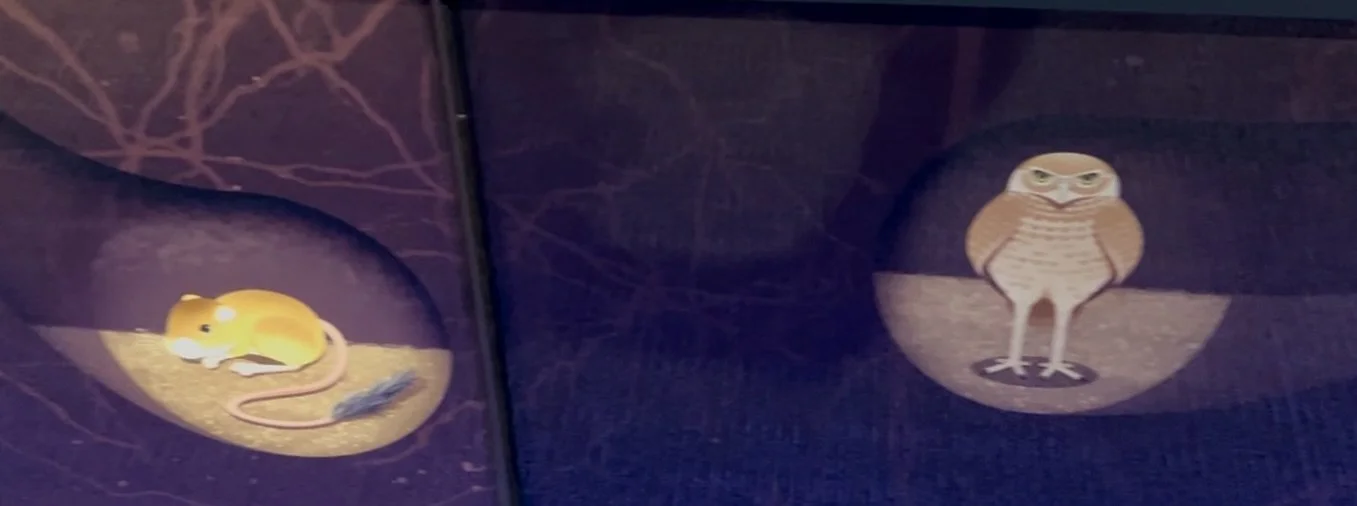
Photo by Mike Mayer
6. This display is also a great example of a community cooperative exhibit. Students from the University of Arizona’s College of Fine Arts designed and painted the individual animal and plant displays.
A Few Observations…
· There was no braille on the identification keys for the plants and animals.
· By adding a textured outline to each of the plant and animal depictions, along with braille, it would add a new dimension of accessibility. Perhaps even a small piece of the animal fur or plant material attached to each individual item would be possible, or part of a separate display.
· Providing some desert smells would be a fun addition – how the desert smells after a monsoon rain, creosote bush, musky javalina odor, smell of seasonal flowers, etc.
Video Introduction to Southern Arizona
In recent years there seems to be a trend away from the large, darkened room with an introductory movie to now using a smaller, more open space for viewing. In addition, presentations are moving away from the 15–20-minute story to a much shorter time frame (five minutes or less). This is certainly the case at SAHVC, and I personally like this change. It allows the visitor to come and go a bit more freely and comfortably.
I like the location of this screen. It is not near the entrance, so folks have time to move around a bit (the interactive map, the plants and animals of the desert, several other colorful displays, etc.) before they encounter the continuous information on Southern Arizona. The 44 topics on the video range from food to sports, Indigenous Lands to ranching, and historic, natural, other local attractions in the areas. Timing ranges from ten minutes on the Tohono O’odham Nation to one minute on saguaros, the town of Marana, and the Arizona-Sonora Desert Museum. The average presentation time is 3 minutes.
The only drawback to this 2 hour and 40-minute loop – the visitor cannot choose the topic to watch. Whatever is on the loop at the time is what you get.
A Few Observations…
· Besides figuring out a way for visitors to choose a topic, adding sign language for the hearing impaired would provide greater accessibility.
Epilogue
The Southern Arizona Heritage and Visitor Center provided me with a comfortable and pleasing experience – I was greeted warmly and enthusiastically at each visit. Of course, there is more to the SAHVC then these four exhibits - colorful displays on Food, History, Nature, a gift shop, artifacts in cases, etc.). From an interpretive planning perspective there are a few things I would recomment, but overall it was wonderful to find some innovative interpretive and visitor centered experiences at a visitors’ center in my back yard!
A special thank you to Catherine Campbell, Deputy Director of Pima County Attractions & Tourism for taking the time to meet with me, provide special details, and allow me to offer some interpretive suggestions.
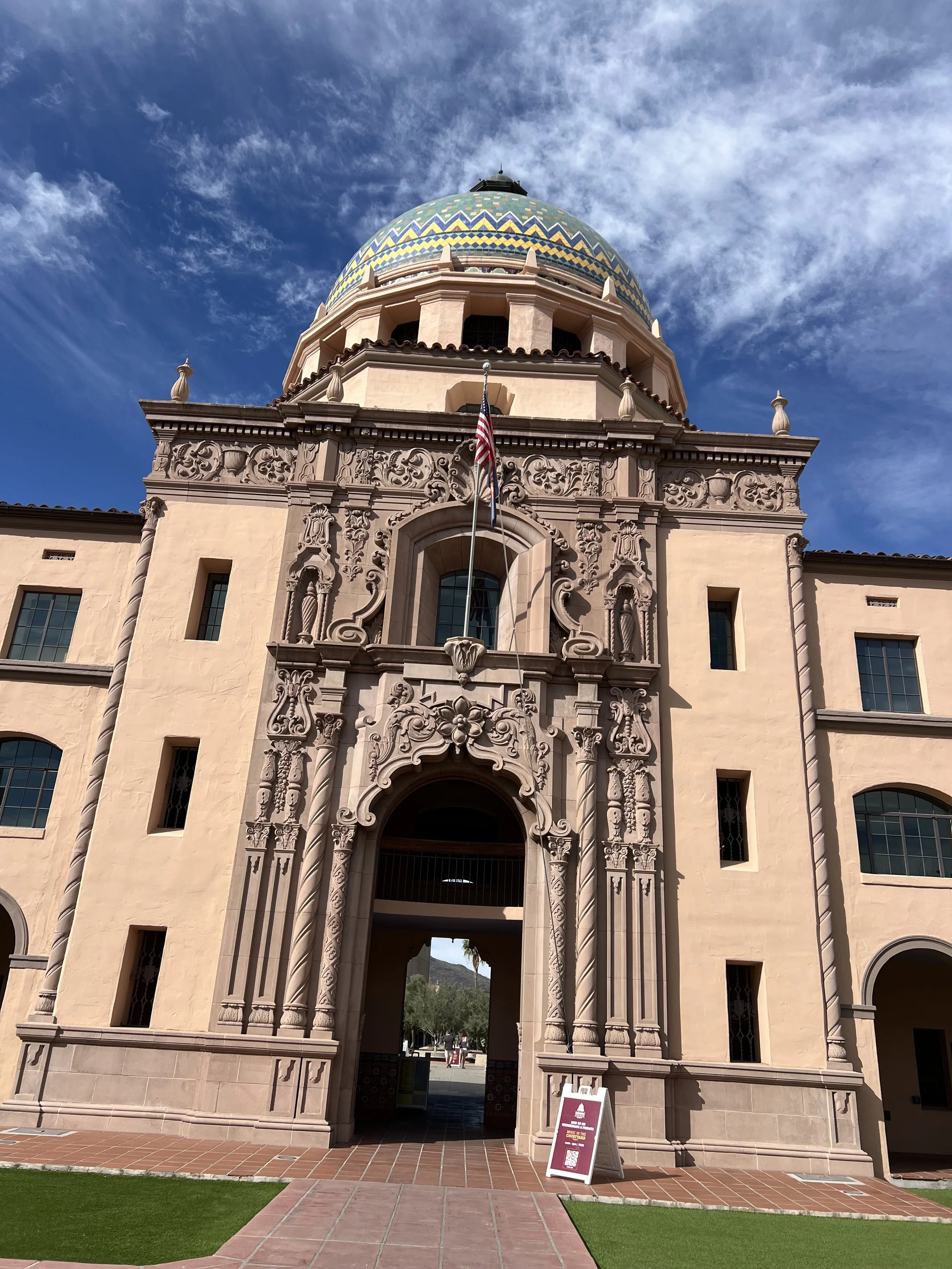
Photo by Mike Mayer
Here are some links to videos that I recorded at the SAHVC…
Welcoming and Attractive Courtyard Entrance
Iconic Plants and Animals of Southern Arizona
Planning Adventures in Southern Arizona
Courtyard When Exiting the SAHVC
And here are website links to offerings at the Historic Pima County, Arizona Courthouse:
Southern Arizona Heritage and Visitor Center
University of Arizona’s Alfie Norville Gem & Mineral Museum
John Dillinger - General Information
Memorial to the January 8, 2011, mass shooting in Tucson, Arizona