As you read this blogpost, I hope you are enjoying the flavour and insights being shared. If you find yourself saying I wish these guys were on our team to bounce ideas around, then by all means connect with us so we can have a conversation. You will discover our approachable coaching style and the wide range of experience we bring to the table. Together, let’s ensure you design and provide for a visitor’s perfect day that will accomplish your facility’s vision for success.
We are constantly searching for interpretive excellence and providing critiques so we can share smart practices with you. This review of the Slovenian Alpine Museum from a visit last year is another case in point.
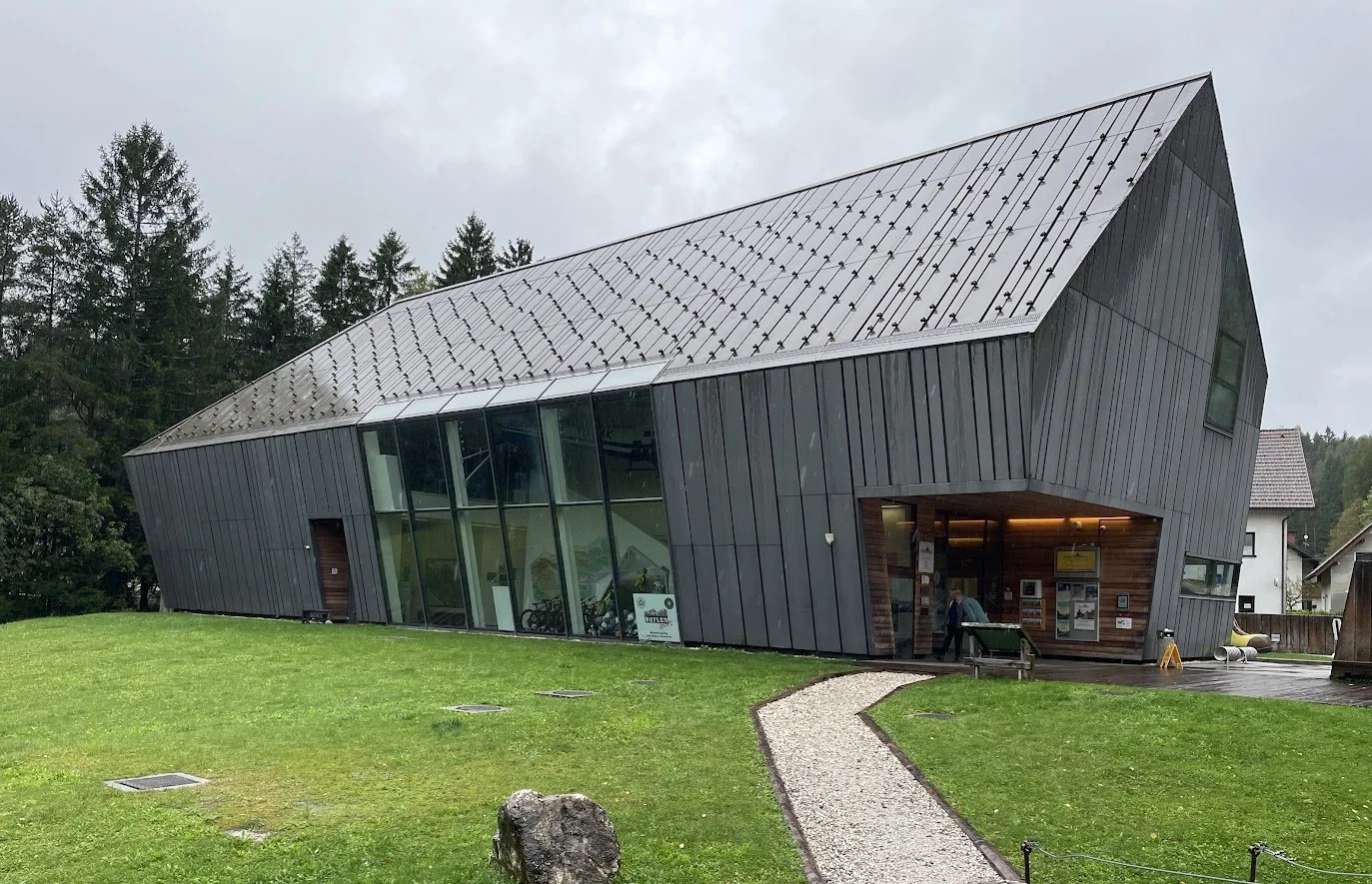
Slovenian Alpine Museum Courtesy Bill Reynolds
Design Reinforces Interpretive Topic
Marketing literature stated that this was the first gamified museum in the world as of 2010 when it opened. The gist of the concept was for the visitor, when they entered the museum, to choose one of three mountain ascents and then receive a corresponding plastic card (like a hotel room access card). This card allowed you to collect virtual stamps at exhibit stations as you wound your way up inside the building. Each station at various points during the climb posed interactive tasks, or tests that you needed to finish before collecting the stamp. Once you had all the virtual stamps on your way to the top, you would receive a reward at the summit.
The permanent exhibition is based on a clear pathway with a series of steps through exhibitry that mimics the climbing of a mountain from ground level entry way to a second level in the building. Each exhibit area was designated by a traditional alpine route marker known as a Knalfec waymark – a solid white circle encircled in red. The climb through exhibits culminated in a 360 - degree spatial photography experience using VR eyeglasses. Their aim was to provide the visitor with a scenic view from the proverbial mountain top they have just “ascended.”
Each stop had a very clear, simple-to-follow and succinct title message. They listed them at the front desk as you started your path like the chapters in a story. They were there at the end as a refresher and nice summary. This is a classic communication philosophy - Tell’em what you are going to tell ‘em. tell’em, and tell’em what you told ‘em. Does your site provide a learning framework for the visitor by clearly laying out the site experience messages available, then repeat them when the visitor leaves?
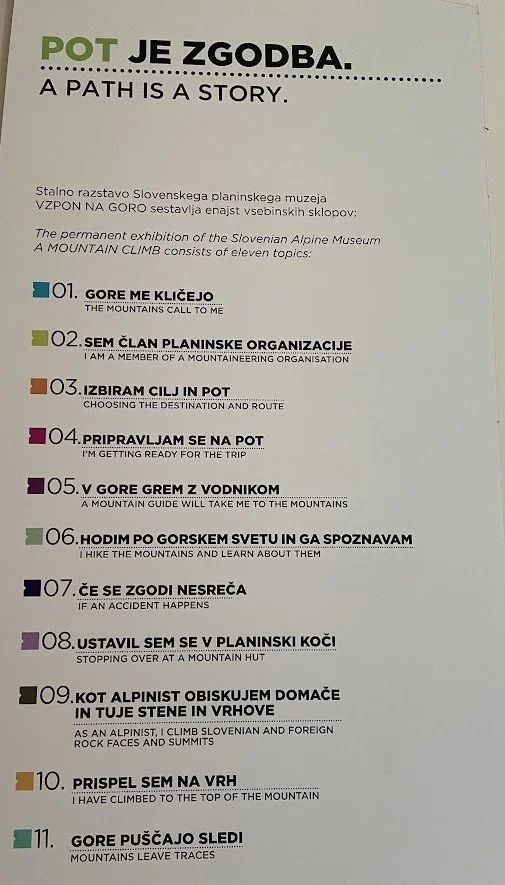
Climb the Mountain List of Story Stations Image Courtesy Bill Reynolds
The facility brochure had a clever layout that was unconventional and confusing at the start but I think I worked out what they were trying to get across. Our numbered route is laid out in the unorthodox way of zigzagging across four pages of text-I only illustrate two so you can clearly see the numbers do not follow an up or down sequence. Sometimes when you are mountaineering you have to go across before you go up again and sometimes you have to drop down a tad before ascending again. You probably notice the top of the brochure was cut at the top to resemble a mountain range. Have you considered how your print material could reinforce the interpretive messaging and animate the narrative?
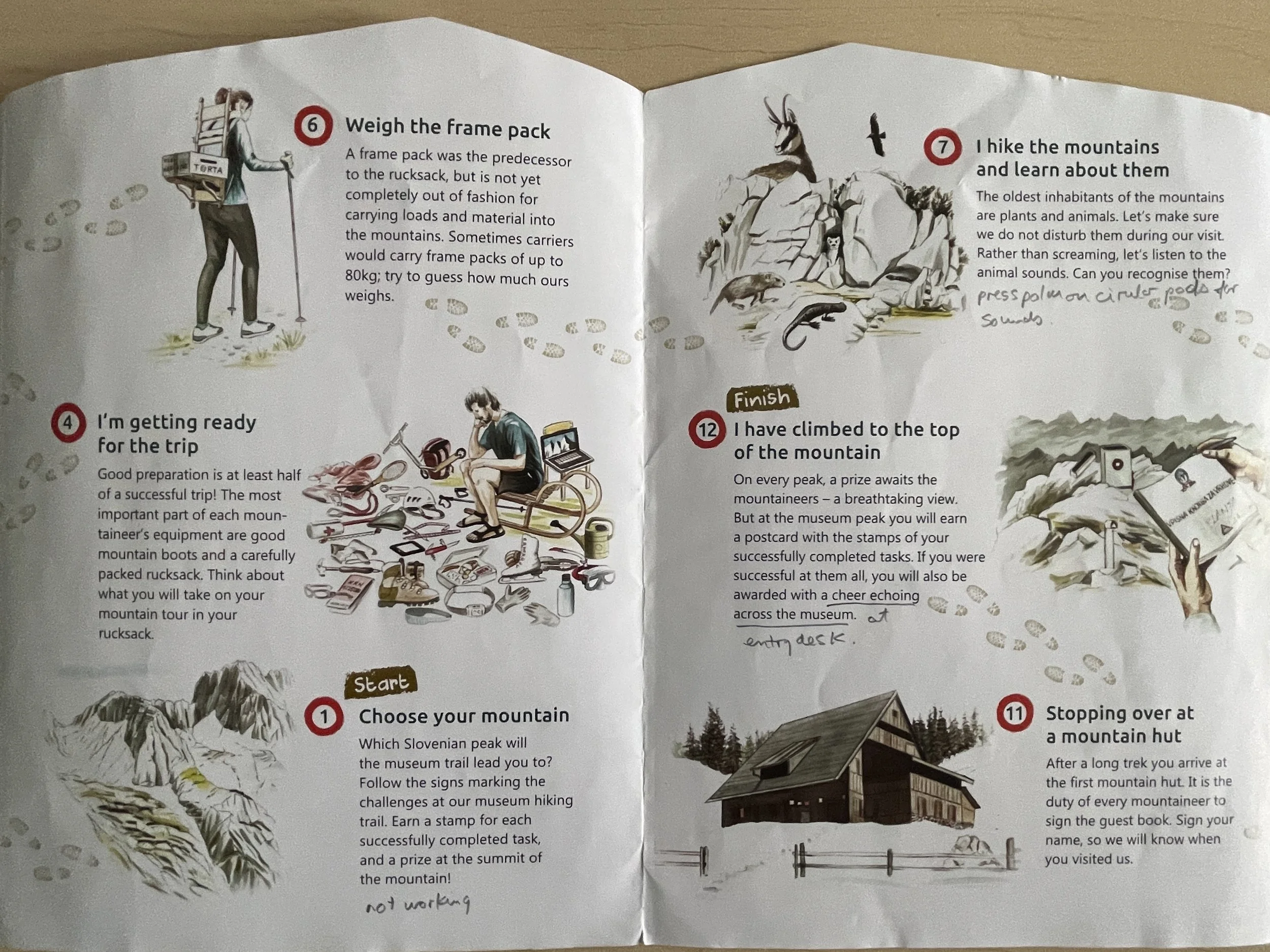
Clever unconventional brochure Image Courtesy Bill Reynolds
Activity Meets Story
A museum about mountaineering should be active oriented and chock full (pun intended) of visitors doing things. Each exhibit area had a mix of text, open displays, large format photographs, glass cases of artifacts, and often an activity. A “make a cairn” activity (like a sandbox) was a fun “doing” way to discuss the importance of navigating your way in open rocky environments by creating a pile of rocks or cairns as mini-beacons.
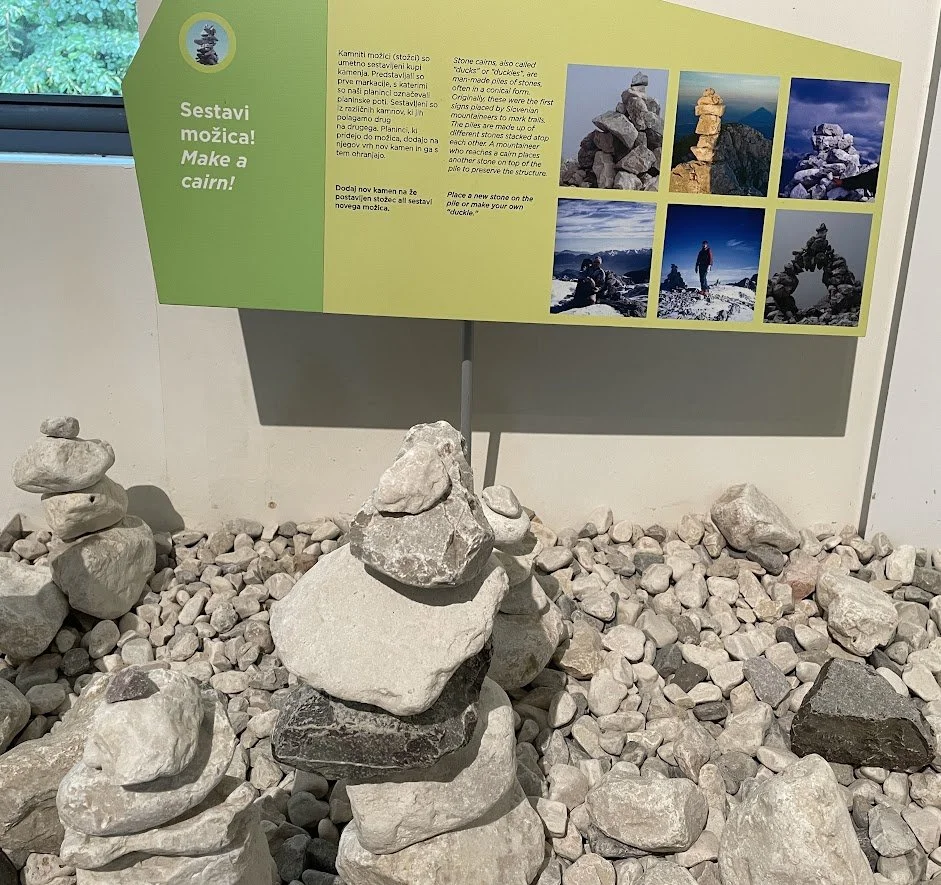
Cairn activity exhibit Image courtesy Bill Reynolds
One station was set up with a whole bunch of items you were to choose from that would be needed for a successful trip. You then had a packing station to weigh and gauge different weights of items. Another station had a climbing harness you fit yourself with along with a via ferrate kit for moving along a wire rope.
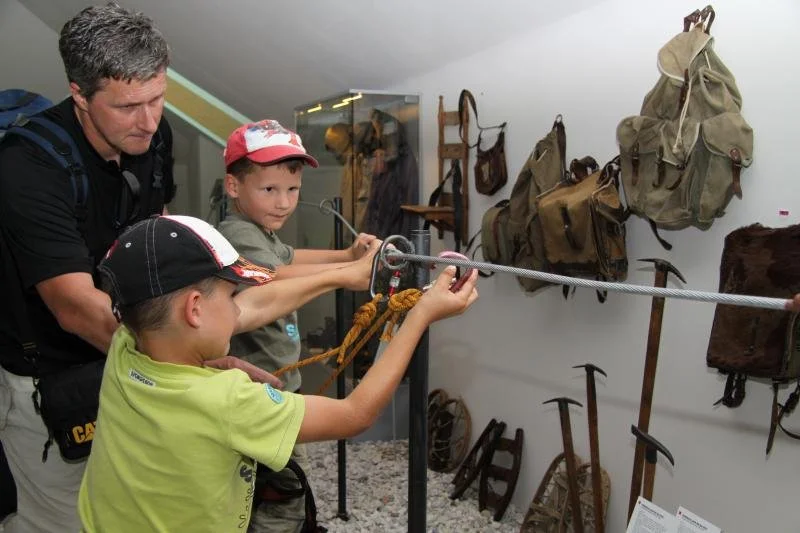
Via ferrata activity Image courtesy Slovenian Alpine Museum web site
A very low - profile activity that I thought had so much more potential was a little box of old postcards of mountain huts and mountain summits. There was no explanation or prodding supplied as to what you were supposed to do with them (at least not in English). Adult visitors are usually reticent about muddling about without clear directions. I read the ones written in English and they related emotions felt when having completed a peak experience of mountaineering. The power of story came forth and I thought more prominence could have been given to what was at the time a forlorn little spot in the children’s play area in the basement.
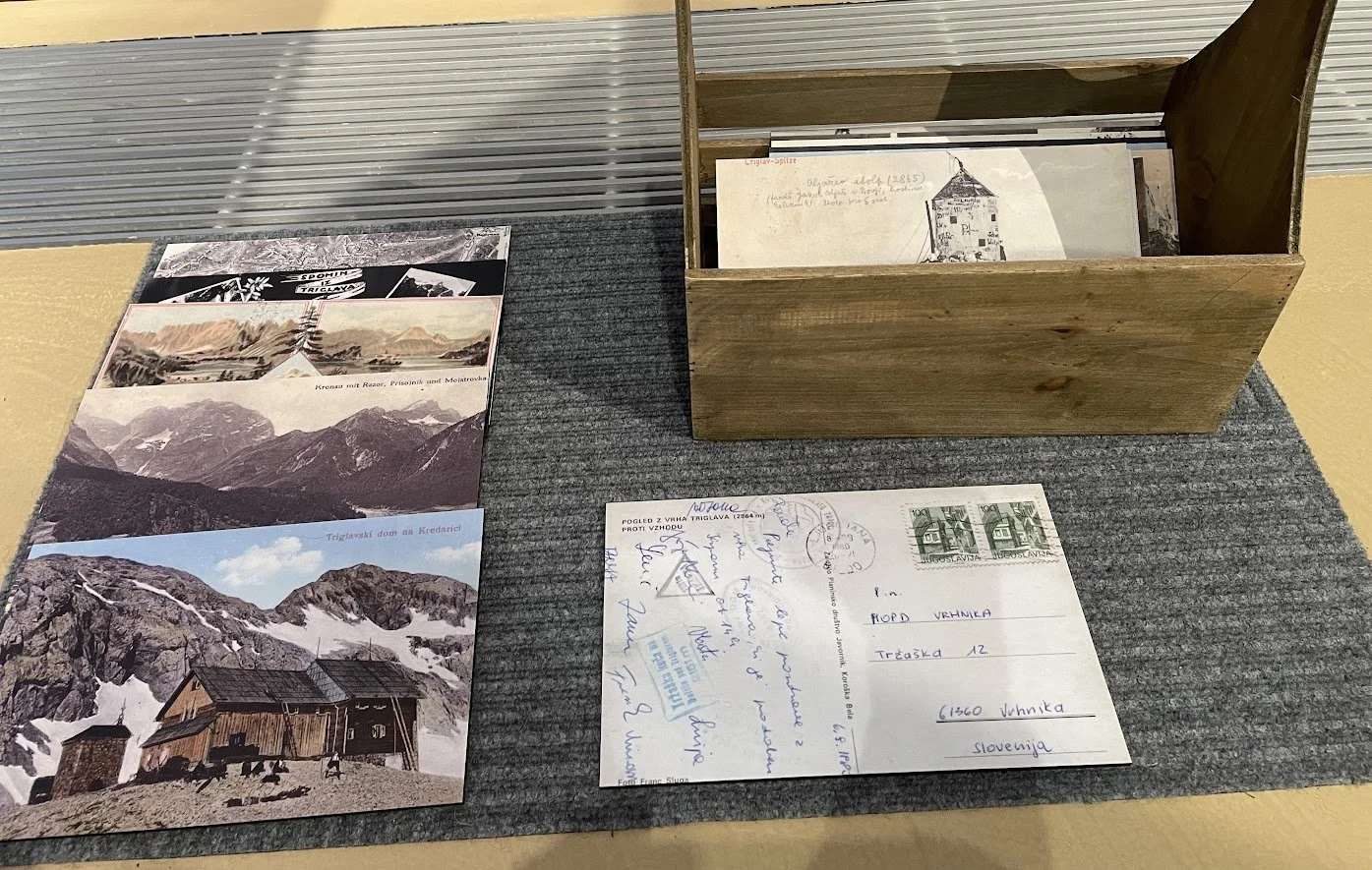
Postcard activity Image courtesy Bill Reynolds
To activate the narrative, I would recommend a form of card sharing where visitors are enticingly invited to read expressions of awe and Slovenian patriotism (presently immersed throughout the exhibits). There were great examples ranging from “the sneaky words of a simple shepherd to the subtly expressed feelings of the greatest artists” such as:
· “we are guests of beautiful but sensitive nature, which should remain so after our visit,”
· “a mountaineer is a person who is looking for problems and is happy to find them and overcome them,”
· “a cheerful mood is desirable at the hut, but this does not mean merriment that would disturb other visitors in the mountain station,” (Honorary Code of Slovenian Mountaineers)
There is an exhibit area where a visitor can listen to poetry, music, prose, and tales through individual headphones, but it is a solo activity and the former example would create more of a social interaction that many visitors crave.
Labelling Meets Story
Story and activity is a great marriage however conversational story on its own is also effective, and we need to look for opportunities to apply this. A really well written piece accompanied an artifact case which made it come alive. It is a conversation between a mother and a daughter about the use of wooden clogs and it is a brilliant piece of effective interpretation. We talk so much about the relevance of stories yet we don’t use them enough in labelling. We don’t have to employ personal interpreters to employ the magic of stories. Review your artifacts and see which ones would lend themselves to having a story printed beside them. This is a great way to engage a parent to read a story to their child making a dull object take on a life and stimulate imagination.
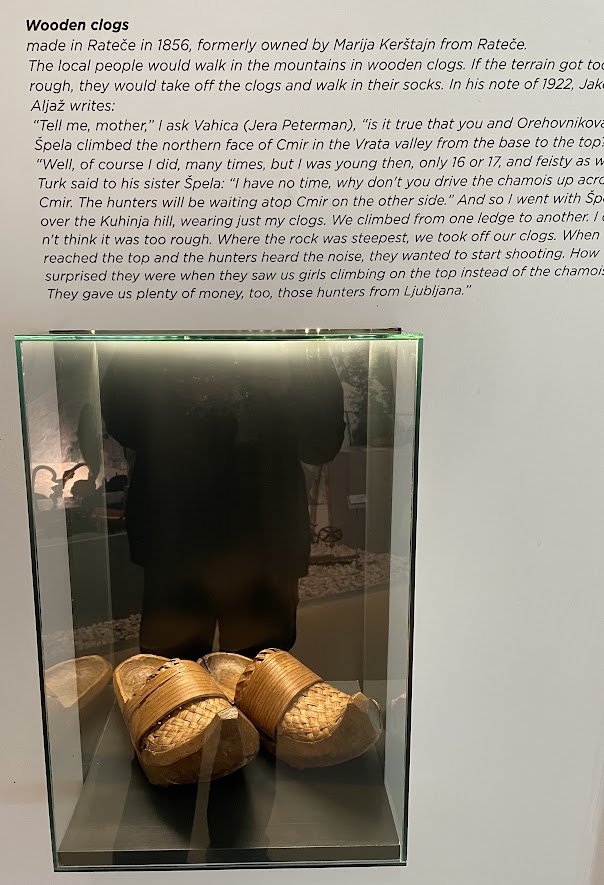
Story meets artifact label Image courtesy Bill Reynolds
Providing Best Reading Opportunities
Much of the text throughout the museum was thought provoking and I especially liked a line they used in the “I walk around the mountain world and get to know it” section focusing on endangered plants. “What has been so attractive that we want to pick flowers as trophies and take them from their (my italics) homes down to the valley and our homes.” This was followed up with explanatory text indicating that “due to the diversity of the surface and the location in a climatically very interesting area, where the cold and harsh continental (Alpine) climate meets the mild and warmer Mediterranean, our mountains are a real botanical Eldorado.” This is so much better than the admonition of “don’t pick the flowers” or “we need to protect our flowers” without any explanation why.
When effort is put into the text writing then providing the best opportunity for it to be read is paramount. I am always saddened when I see poor placement and poor sizing of text. Placing text should not be an afterthought and all locations in the display are NOT equal. Here are two poor examples to illustrate a point.
Starting a text at three feet off the floor then running it to the ground is only going to be read by toddlers so then it better be in large type, have colourful graphics and be written at a lower age level.
In addition, they have put three panels in one tight area trying to grab my attention along with two artifact cases with labels. You might be able to get away with this combination if the typeface is large and the amount of text is small. We have to be more vigilant when contracting sign production to stipulate readable text size along with editing down the text if necessary.
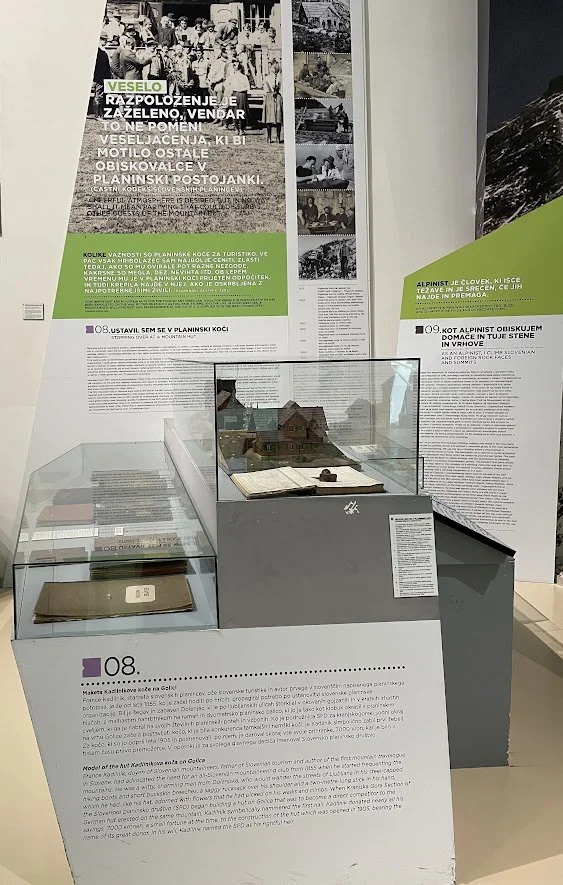
Poor label positioning Image courtesy Bill Reynolds
In this second example, I took the picture at the level of my eyes so you can see the strain I would encounter to read the labelling. This shows a decision to experiment with three different format types of labelling in the same exhibit - ALL of them were just above floor level. Don’t do a mixmatch. Experiment with different styles in different displays yes but not in the same one. Try out different positions adjusting the language level for the different age of viewer. Please review the best label positioning for your different visitors’ pleasure. I see this mistake so often and, in many cases, changes are relatively easy to do if we were just taking notice of visitor interaction or lack thereof.
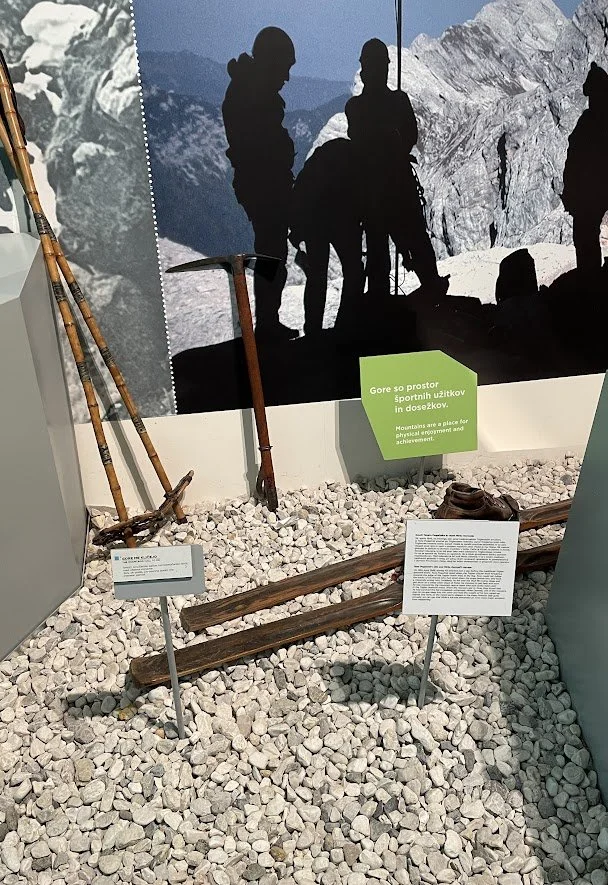
Label height issue Image Courtesy Bill Reynolds
Plan for Contingency
By the way, I was not able to play the designed stamping game because there were technical difficulties and the several stations scattered during the gallery climb were not working. The VR glasses at the summit were also not working the day I visited.
Technology enhancements are great when they are working but from the visitor standpoint if they are not working, you feel like you should receive some compensation for a lesser quality experience. If this is a substantial diminishment or something integral to the whole experience, then a discount on the entry price would be expected. Especially if there has not been any contingency set up, it is hard to justify the regular entry fee. I have never encountered any discount at a heritage facility for this reason NOR have I ever found a contingency plan for when technology fails. Is this being customer oriented? When you set expectations and don’t deliver, you should be concerned and design some form of make-up. I am not suggesting this is done for a one-off occurrence but certainly when an element of the visitor experience is not available for an extended time period.
Do you have the possibility of this happening at your site? Have you thought about what you would do?
Interpretive design involves many aspects to ensure your visitor has a stellar experience. Today we dealt with integrating story and activity while being conscious of label placement. We introduced the issue of accounting for breakdown contingency. As I mentioned at the start of the article feel free to contact us for a creative jolt, some constructive feedback or a specific strategic review – we’ll help you engage the visitor’s Head, Heart, Hands, & Hunger. Get in touch if you need to re-imagine and enhance a trail, an exhibit, a front entrance, a farewell zone…