Never underestimate the time spent eating and drinking by our heritage visitors. These are wonderfully important moments for us to reinforce our messaging, show that we care and connect with our visitors in a light and friendly manner -perhaps even in a perspective-changing way. I hear lots of conversation about expanding extension or outreach work and having a presence in the community- well there is a community waiting for a connection right in your own foodservice area.
I try to capture moments of design delight whenever I can and for this post I will be focusing on several examples from cafes that illustrate the aforementioned philosophy. A visit to our local zoo’s cafe got this post kickstarted as they had instituted several mission reinforcing touches.
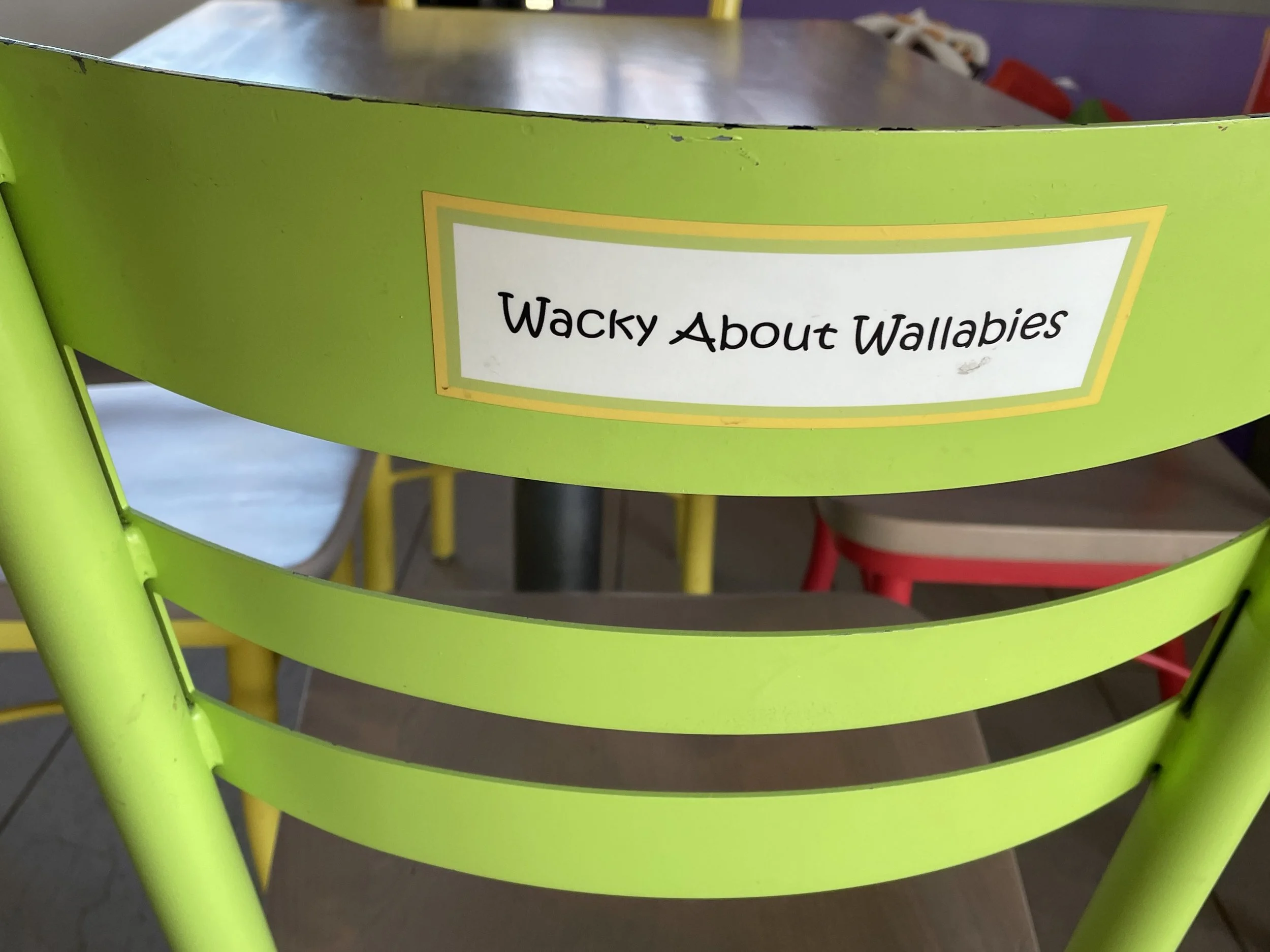
Friendly cafe chairs reinforcing site mission Image Courtesy Bill Reynolds
Right off the bat I noticed the happiness-inducing, colourful choice of chairs - not your standard industrial or uniform, neutral- coloured chairs. Not only that but their chairbacks had labels which demanded a closer look. Simple, funny and mildly thought provoking as they referred to animals you could see or had seen in the zoo visit-anticipatory or reinforcing, depending on what point this is during the visitor journey. I could imagine kids and kids-at-heart reading the backs and deciding where to sit based on their animal affiliation (I chose the passionate about pandas chair).
This could work for any type of heritage attraction and we would love to brainstorm with you about possibilities. Drop us a line and we can “chair” the creative discussion.
Necessary signage does not need to be institutional, which is often chosen as an easy way out. Please advocate for friendly signage as a sort of attitude preparation for the visitor. Being a Canadian I do frequent a favourite national coffee shop called Tim Horton’s who are famous for their donuts-an important context. Here are two examples from their establishment that set a light tone and get your attention.
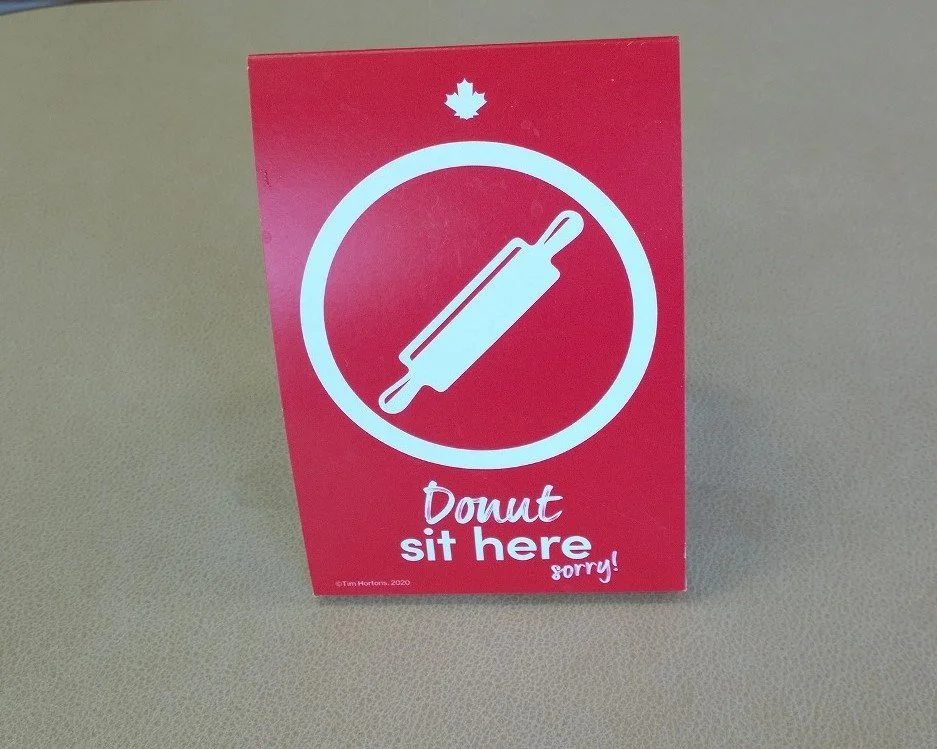
Fun cafe “rule” signage Image courtesy Bill Reynolds
The rolling pin image in the centre of the universal slash red logo sign signifying “do not,” links to their baking function and grabs the eye plus adds a slight chuckle. They even incorporated a play on words with “donut” as something they are well known for. This might be considered a groaner in the humour category, yet it cements an image in the client’s mind while attempting levity.
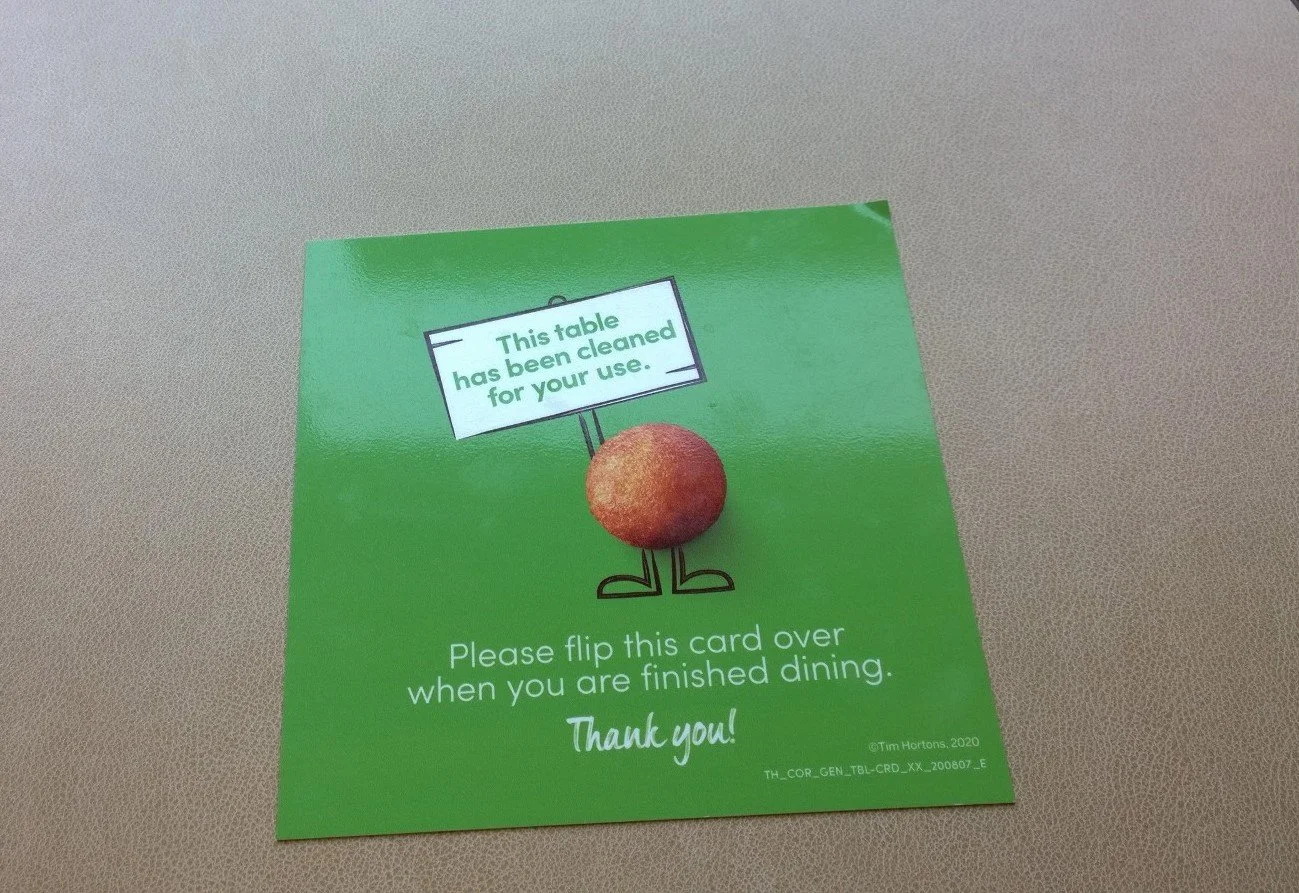
Necessary signage linked to site theme Image courtesy Bill Reynolds
The second example uses a stick figure to hold a placard announcement. The core body of the stick figure is represented by an object synonymous with Tim Horton’s - that of a cooked round dough ball known affectionately as a Timbit. This type of attention- getting device is open for heritage business. I challenge you to have fun and propose a variation to necessary signs incorporating a heritage symbol or clever wordplay.
When the beverage or meal is presented, we are given the opportunity to link it with our heritage facility, so when this botanical garden floral heritage site added a petal array on the side of the coffee cup, I voiced a silent hooray.
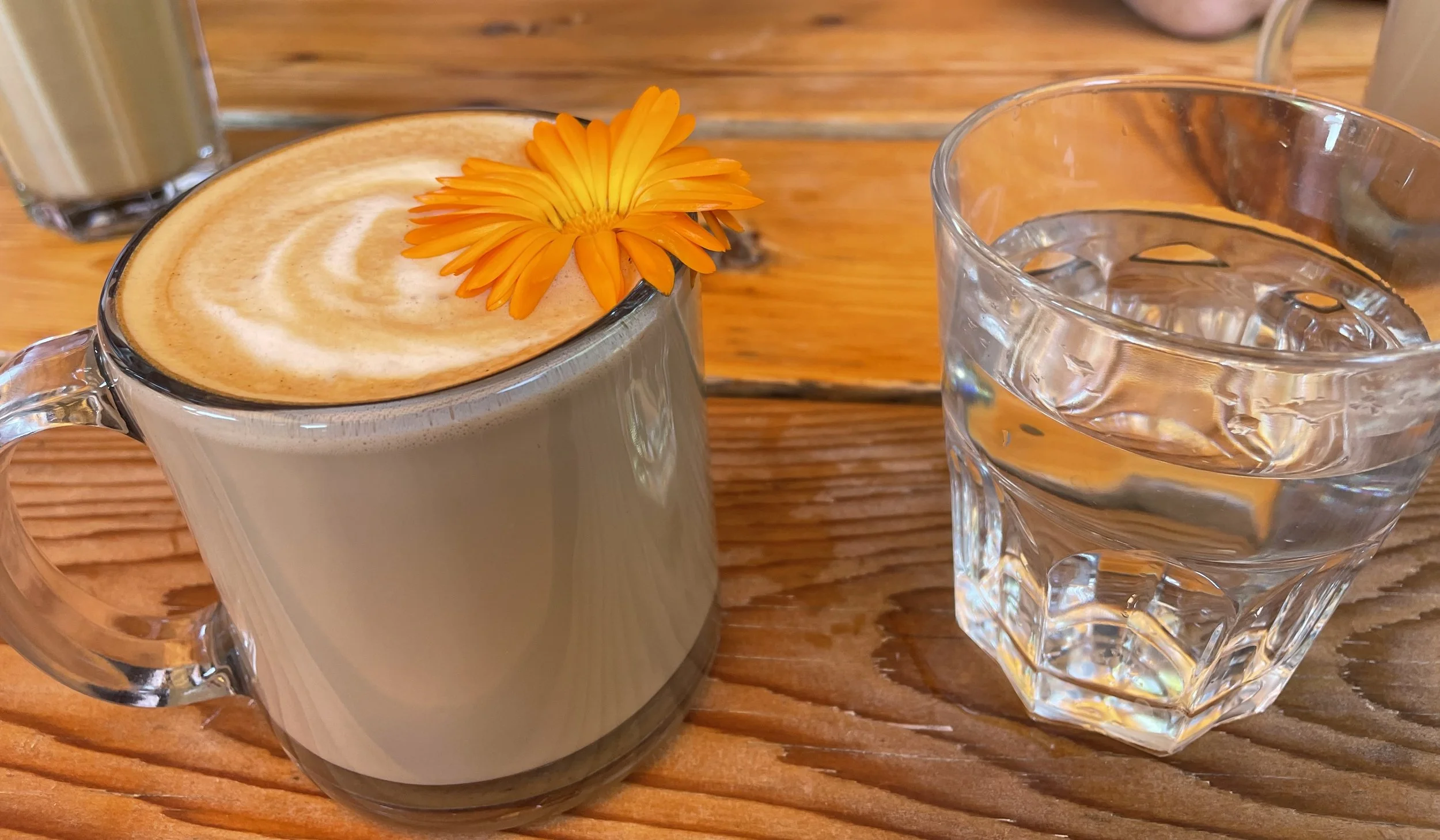
Heritage site cafe detailed touches Image courtesy Bill Reynolds
Getting creative with your cutlery and place settings provide another potential linkage to your site heritage. Note the natural materials- made placemat in the image selected, as well as how a spoon is used to substitute for a head to complete the hand - crafted doll figure. My recollection is that the doll was shaped from a napkin, similar to how room service staff fold towels into animal or bird shapes on your bed to greet you as you enter your room.
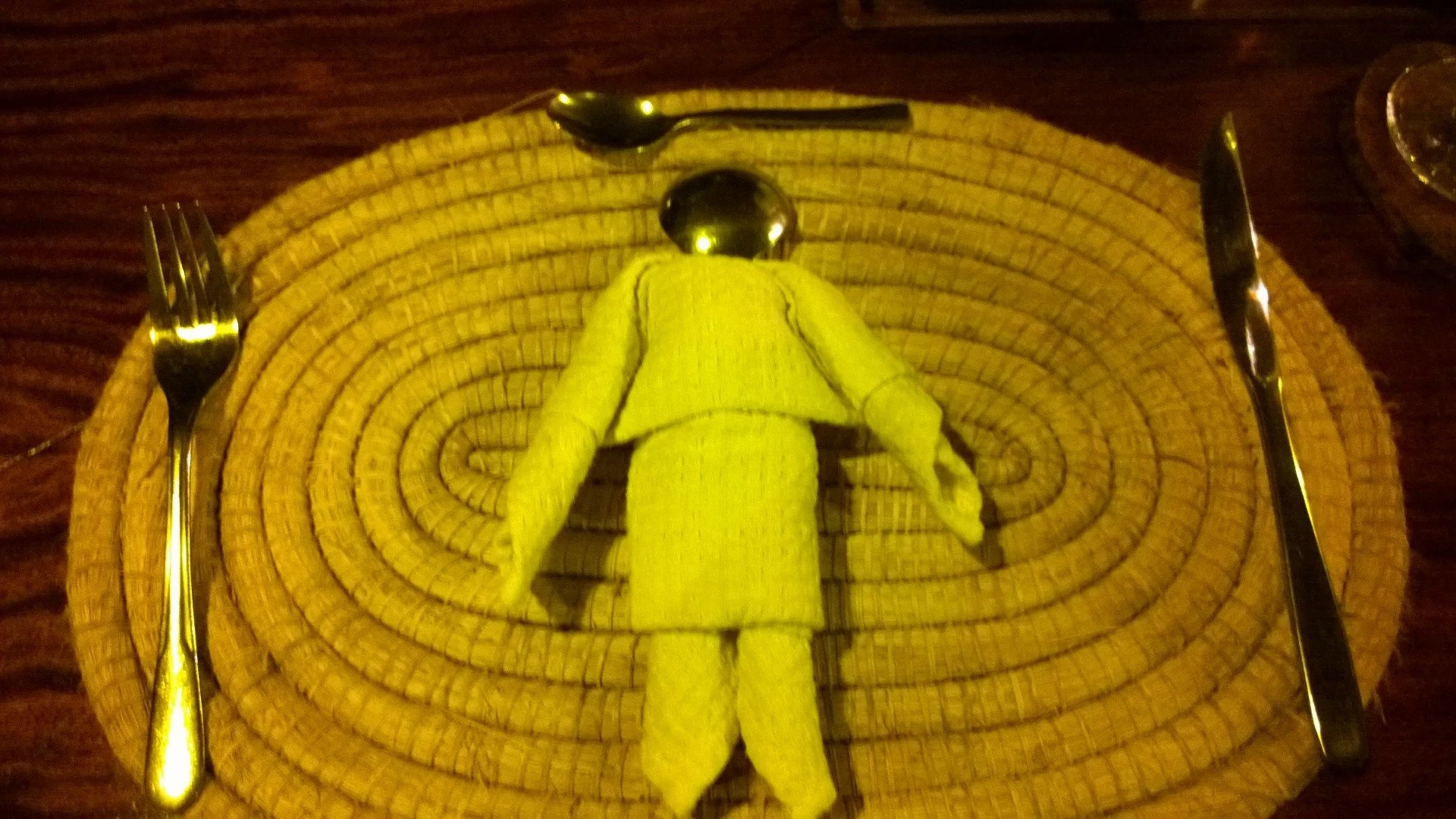
Place setting heritage linkages Image courtesy Bill Reynolds
If you have table service payment, then presenting the bill provides an option for heritage linkage (and gift shop bonus connection), by providing a receptacle for the bill that has a heritage affiliation. Does this basket being held by a cheerful doll in indigenous clothing bring a smile to your face, remind you of a cultural performance and make paying for your bill any easier? Yes, yes, and perhaps.
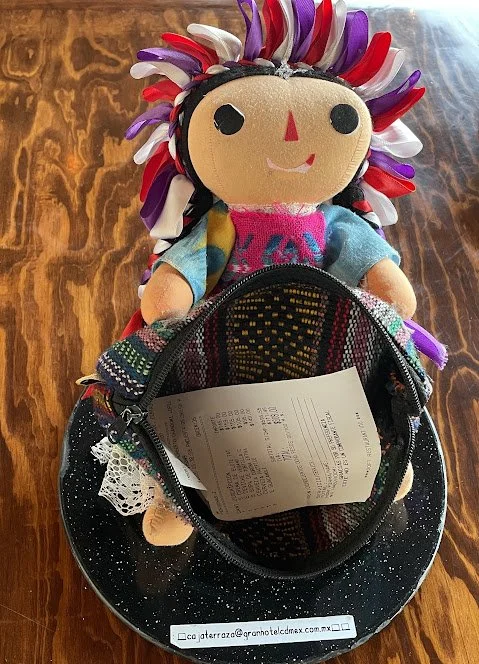
Added touch in delivery of meal bill Image courtesy Bill Reynolds
Even if you do not alter how items are presented, you can still prepare a jovial imaginary menu for a table centrepiece or menu insert. The dinosaur soup entree description illustrated below would be fit for a Cro Magnon appetite of any visitor to a paleontology museum.
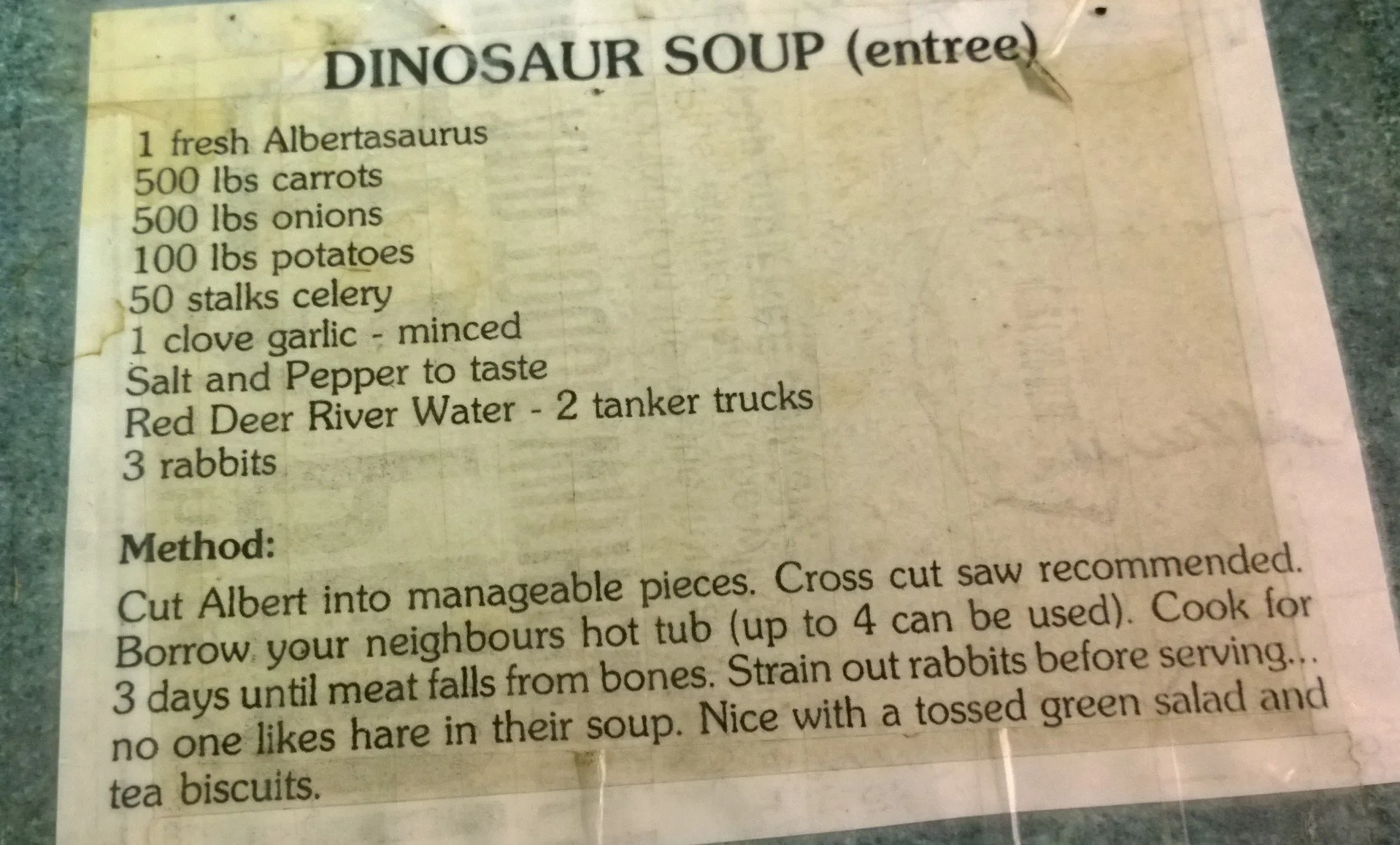
Menu link to heritage site Image courtesy Bill Reynolds
Do you think a light- hearted description like this would put a visitor in the right mood to explore your heritage site? Or top the visit off with a family reflective moment about how humankind did not co-exist with dinosaurs so dinosaur soup or brontosaurus burgers (with apologies to TV cartoon Fred Flintstone), would have never happened. On another level of discourse one could debate whether genetic engineering could possibly bring back a mammoth from extinction- even if not for consumption.
Wall hangings that speak to your collection or heritage focus are an obvious addition to your facility café as a conversation starter. Ensure you add mental value to the aesthetic value and include some text with the picture- in this case the fossil wall mount above the café chairs and table shown in the image.
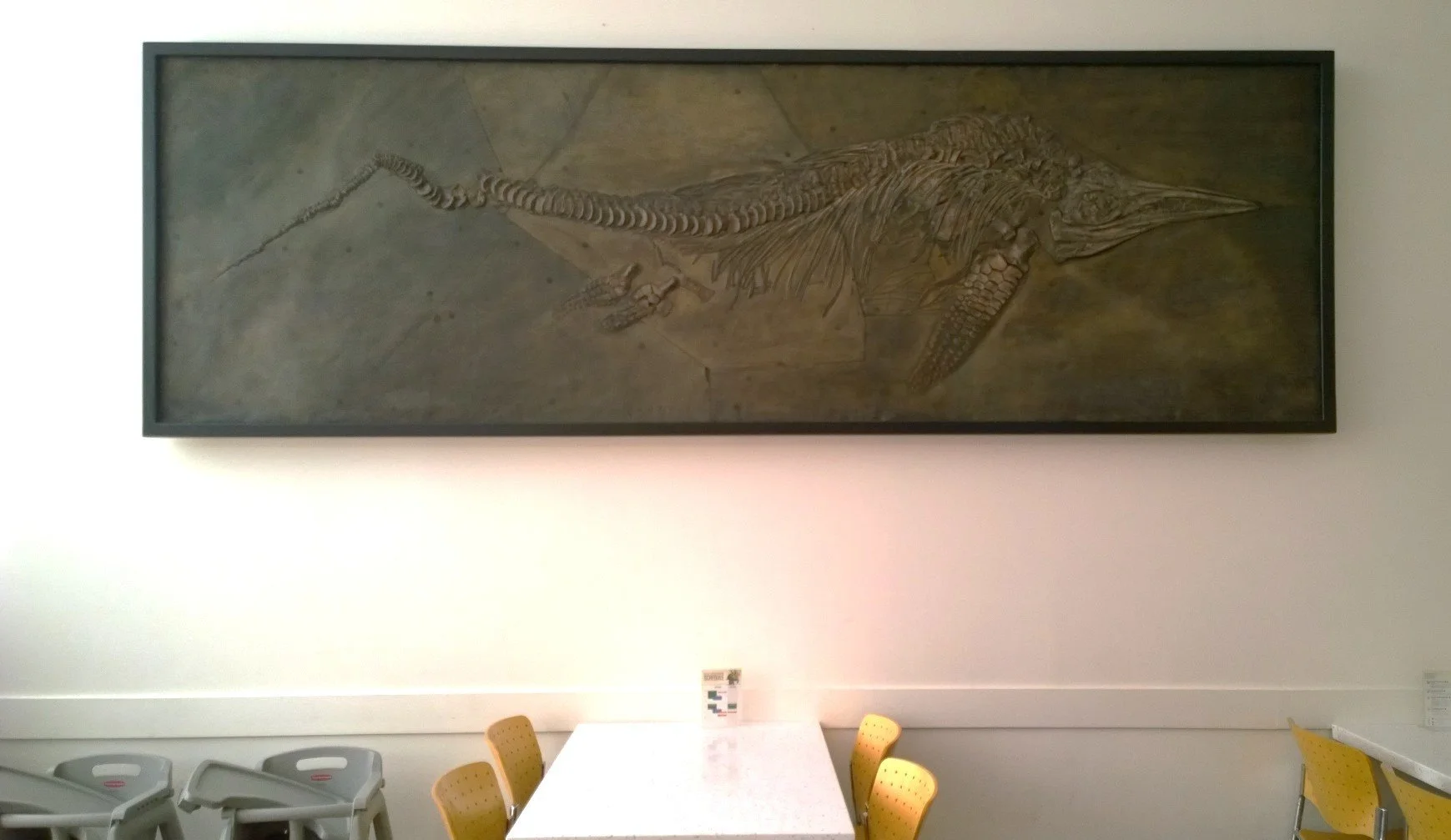
Fossil wall mount Image courtesy Bill Reynolds
If the text accompaniment (label, if you will), tells you which gallery you may find associated display items, then we are talking anticipatory with a directional build on. If the label tells you how to find out more about the artifact, then we are talking about reinforcement, while you consume your beverage, and/or chat with your tablemates. This can be done via QR code or google search on your phone.
The partnering concept with a local café could mean loaning them a wall piece, as in the fossil mount example shown in the image, that would highlight an interesting aspect of your interpretive site -a form of extension that has mutual conversational and linger longer benefits.
A wall collage of artifacts presents many interpretive possibilities. Figuring out what function an odd selection of items were previously used for is one option.
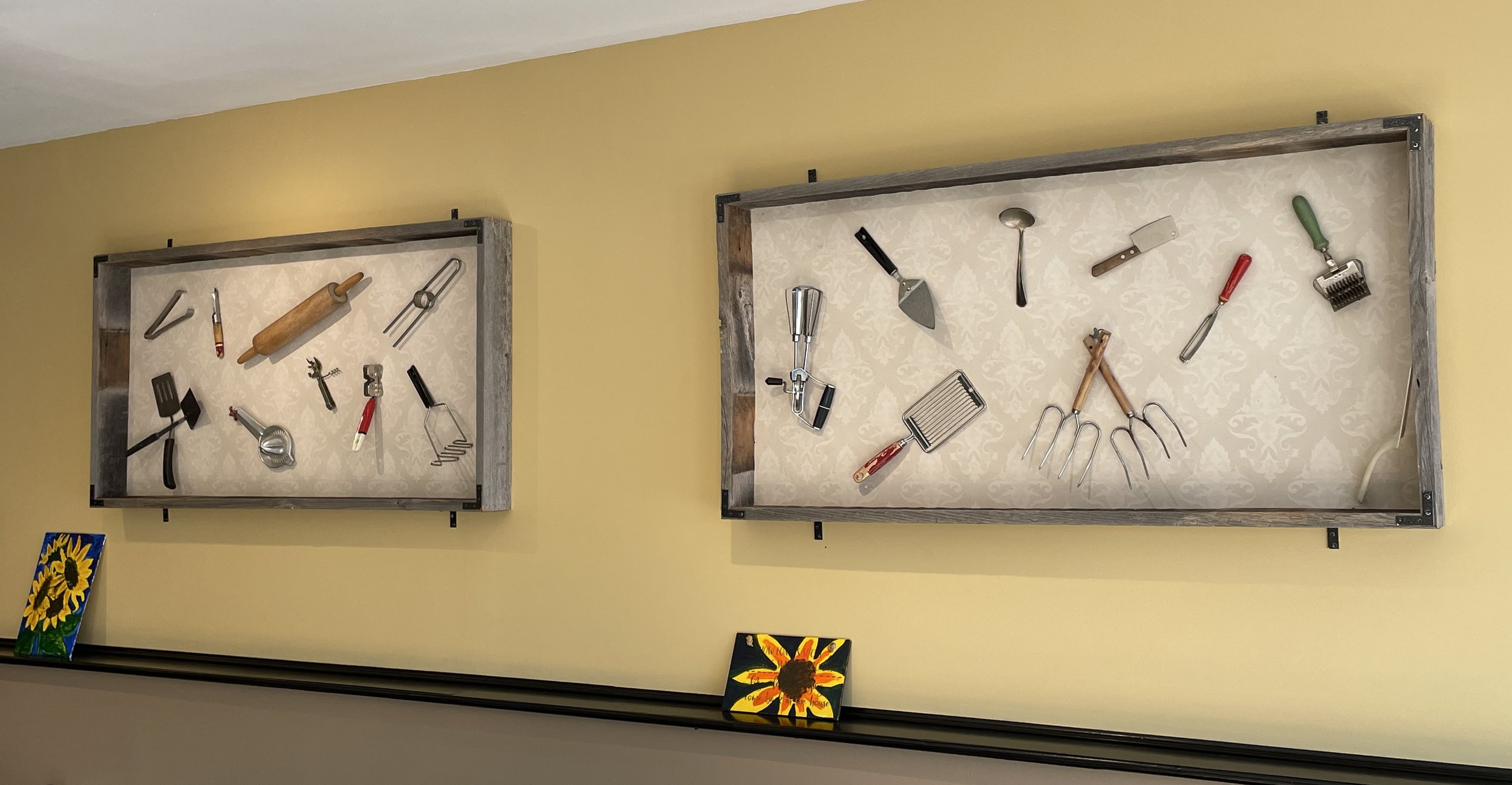
Artifact wall collage Inage courtesy Bill Reynolds
This could be an informal interaction among food and beverage consumers or you could turn it into a formal game with prizes. This could be designed with a changeout potential so new selections would freshen up the wall display catering to repeat visitors. You should give some focused direction and structure to the visitor - artifact interaction by employing an instructive label and menu/placemat combination.
Last but not least from my grab bag of collected images, is the long table set for a group function, actually a pre-wedding get together, that has a book at one end with an obvious bookmark inserted. This got me thinking…
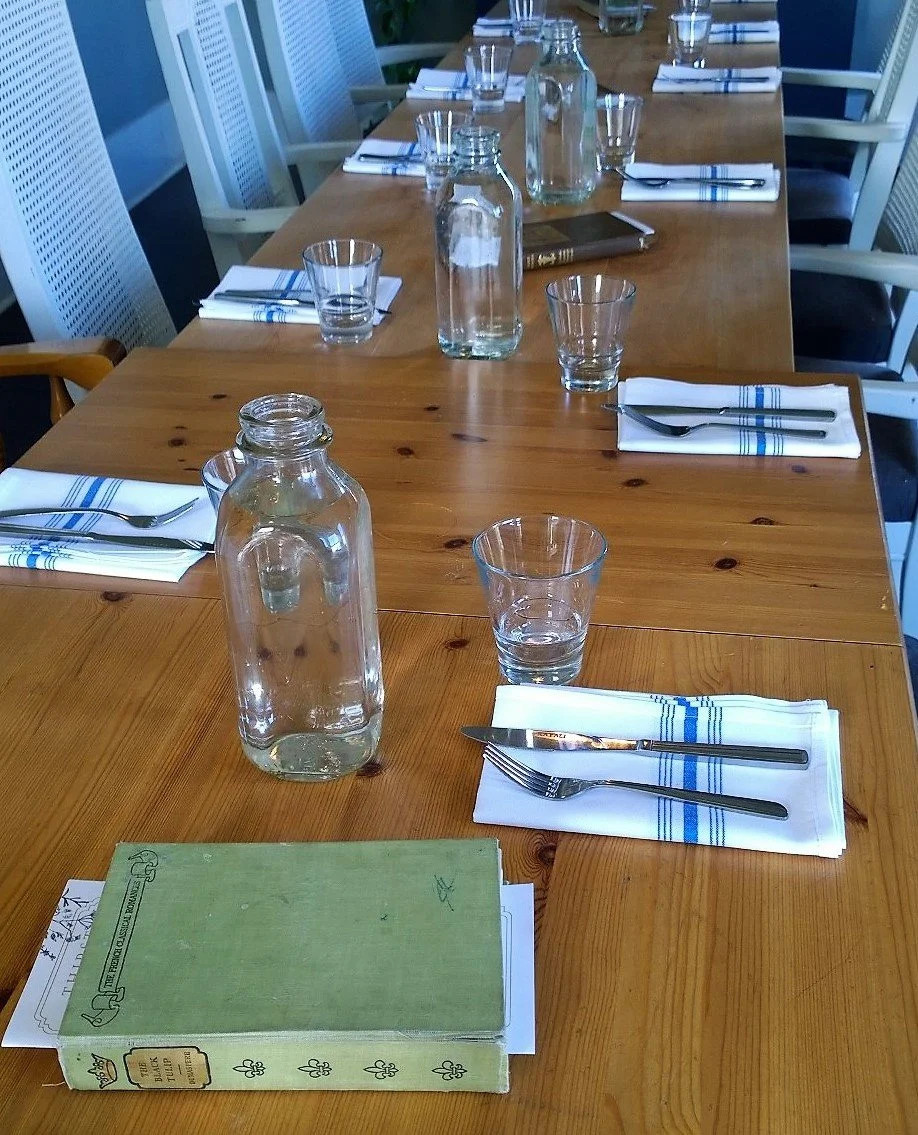
Relevant bookmarked readings on cafe tables Image courtesy Bill Reynolds
… what about sharing curated readings on topics germane to your heritage site at your café. Think dialogue starter. This would work for any size group sitting (even a couple or family). The books could be set out on each table or placed on shelves for browsing with an obvious invitation as you enter the cafe. Books would be chosen that relate to your site’s reason for being, and that lend themselves for quick reading snippets, like inspirational quotes or passages or poems. Perhaps an adult and a child book could be paired if set on a table. If you try this out let us know how it works. Note: there are more logistics involved but don’t fall prey to analysis paralysis!!
If you find this all too complex then start small with baby steps and at least attempt something simple that enhances the visitor experience in your cafe. Themed cookies in the shape of wildlife that you could encounter on a trail walk or on a drive through your park, adds so much more to one’s visit from a memorable standpoint.
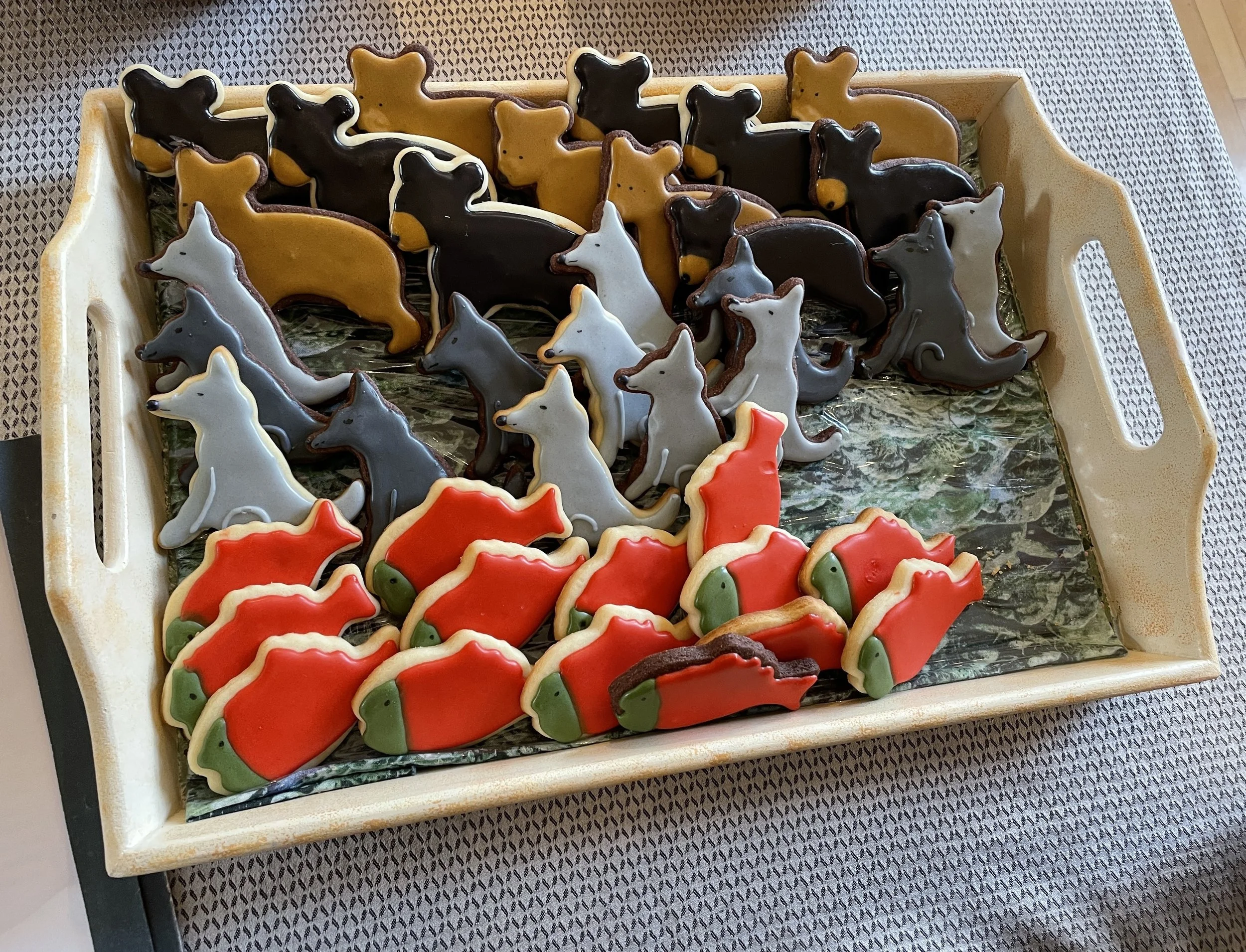
Themed cookies Image courtesy Bill Reynolds
In addition, by adding a special touch you jettison the generic and improve the purchase chances. Something this simple if connected to a designated animal enclosure or exhibit could be a direct revenue generator and it also allows for the visitor to demonstrate a way to care for the site mission.
Fauna seems to lend itself readily to creating cute shapes -although you are eating them after all. Even if you don’t have an in -house bakery, working with a caterer or a docent with a knack for baking can make this happen. The wildlife biscuits in the image included were crafted by an art gallery volunteer.
I don’t recollect seeing any historical sites utilizing this theming approach. How about candlestick cookies, bowler biscuits, musket macaroons, or wagon wafers anyone? Please share any historical themed confections you have spotted.
Consider café collaboration as a step on your outreach path. Take the time to engage with your café manager to “up” the visitor experience, if you have one in your facility. If you don’t, consider a local establishment as a potential marketing partner who could benefit from an affiliation with you and vice versa. Known as cross promotion, this strategy is vastly underutilized in the heritage sector and consideration for this would reap many benefits.